Breaking Down SMCI Super Micro: An AI Server Meme Stock Reborn by Earnings
SMCI Super Micro Computer saw its stock soar nearly 20% in a single day, fueled by AI server orders and FY27 revenue guidance of $65B–$72B. However, historical accounting controversies, margin normalization, and share dilution remain three major risks. This article uses plain language to dissect SMCI's business logic, the truth behind its financials, and the risks investors should weigh before buying or selling.
Decoding SMCI Super Micro: An AI Server Comeback Stock Powered by Earnings
If you follow US tech stocks, you've definitely heard the ticker SMCI — Super Micro Computer (Chinese name is 超微電腦, but to distinguish it from AMD's "超微", the market usually just calls it SMCI). It is one of the world's largest AI server and storage system suppliers, primarily building "GPU racks" for hyperscale cloud providers and large enterprises — essentially the vehicle that carries top-tier AI chips like the Nvidia H100, H200, and Blackwell.
On August 12, 2026, SMCI released its FY2026 Q4 earnings. After-hours shares spiked nearly 19%, jumping from below $32 to above $39. This article breaks down what SMCI actually does, whether this earnings report is really that great, and where the risks lie.
What Does the Company Do?
SMCI doesn't make GPUs itself. What it does is "assemble 10,000 GPUs into a functional data center" — this industry is called AI Infrastructure.
Its core products include:
- GPU server racks: For example, 8U and 10U rack-mounted systems powered by Nvidia Blackwell B200, each capable of housing dozens of GPUs, sold to hyperscalers for large-scale training.
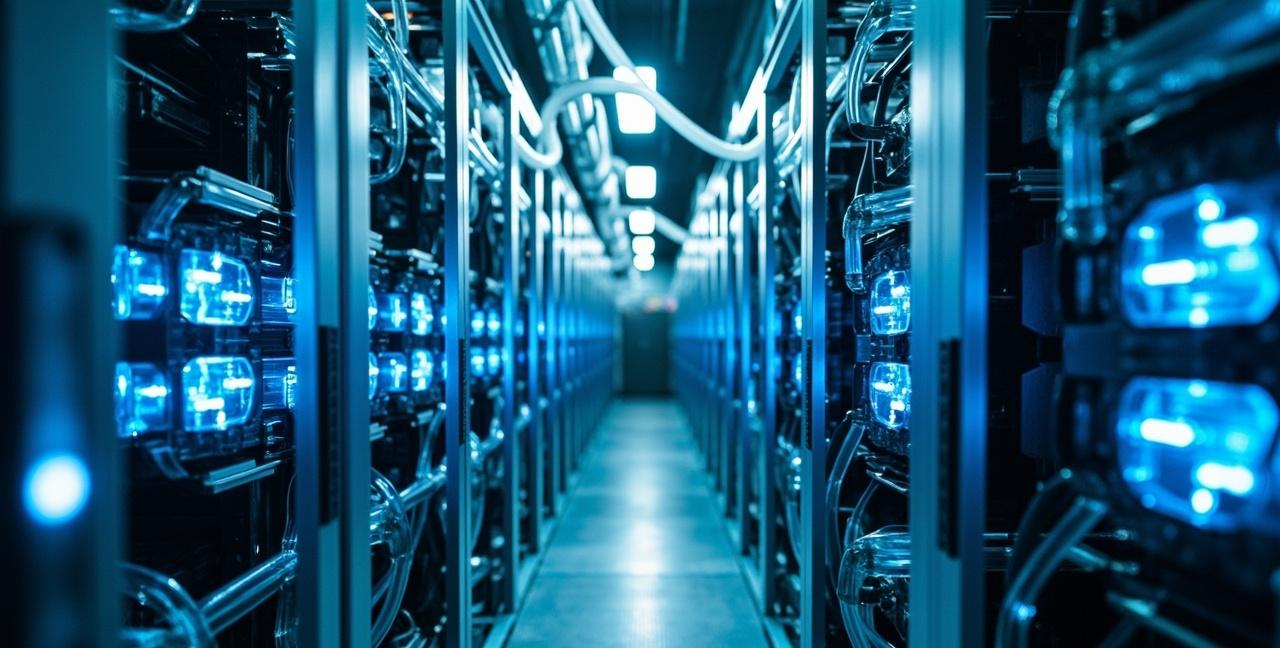
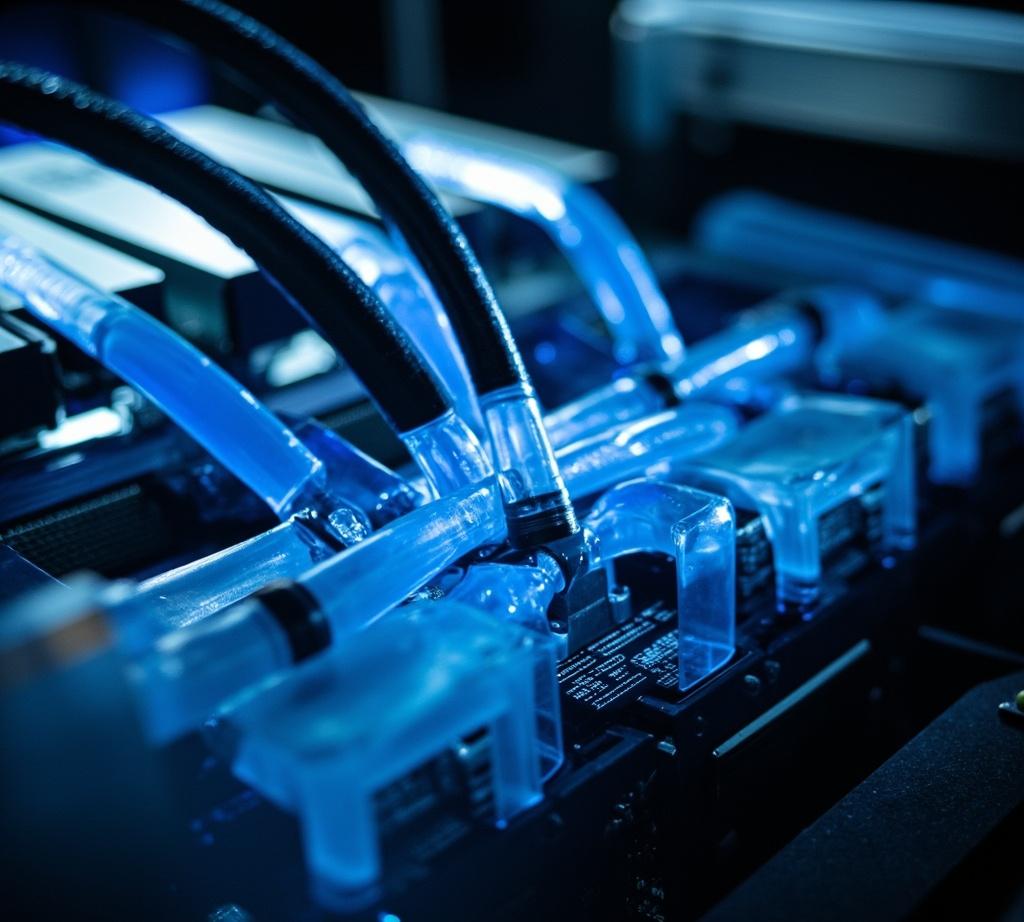
- Liquid cooling solutions: AI chips are running hotter and hotter, and traditional air cooling can't keep up. SMCI's liquid cooling design is its core technical differentiator.
- Data Center Building Block Solutions (DCBBS): Pre-integrated packages combining servers, storage, networking, and cooling, allowing customers to deploy within 30 days.
Key customers include US cloud providers (CoreWeave, Lambda Labs), large enterprise AI divisions, and — through OEM channels — several cloud giants. Lenovo's AI server order pipeline was previously announced to have surged 157% quarter-over-quarter, which also indirectly confirms the explosive demand in this segment.
What Did This Earnings Report Actually Say?
Key highlights of SMCI's FY2026 Q4 results (figures in USD):
- Adjusted EPS: $1.70, beating market expectations of $1.59 — a slight beat.
- Quarterly net sales: $11.2 billion, slightly below the market expectation of $11.26 billion — a minor miss.
- Adjusted gross margin: 17.6%, a notable year-over-year improvement, mainly benefiting from a higher share of enterprise customers and higher margins on premium liquid-cooled racks.
- FY27 Q1 revenue guidance: $14.5–$15.5 billion, with a midpoint of $15 billion, far above the market expectation of $11.99 billion.
- Full-year FY27 revenue guidance: $65–$72 billion, while the market was only estimating $54.43 billion — guidance came in $16 billion above market expectations. This is the main reason the stock surged.
- Order backlog: over $60 billion, equivalent to locking in orders for the next two years in advance.
Why is the market so excited? Because SMCI has long been weighed down by accounting controversies and delayed annual filings. This time, management was willing to put forward a guidance figure of astronomical proportions — essentially telling Wall Street: "We've really locked in those orders, you can revalue us now."
Why Did Bernstein Raise Its Target Price But Still Hold?
Following the results, Bernstein immediately raised its SMCI target price from $37 to $42, but maintained a "Market Perform" rating. Three reasons:
- Track record of multiple misses: Over the past two years, SMCI has delayed filings and switched auditors. The market routinely "discounts" its guidance, so this time coming in too far above expectations actually raises doubts about whether it can deliver.
- Gross margin normalization risk: The 17.6% adjusted gross margin is higher than some competitors (Dell, HPE in single digits to mid teens), and the market worries that as competition intensifies, margins could be pushed back down to the 14–15% range.
- Working capital pressure: To hit $65 billion in revenue, SMCI needs to pre-order massive quantities of chips from Nvidia and AMD. Working capital demand will surge, potentially requiring further convertible bond or equity issuance — bringing dilution risk.
Other brokers are more bullish — for example, Needham maintains a Buy, because the backlog figure is too specific to be fabricated. Overall Wall Street consensus is "Hold", with target prices ranging $40–$50.
Where Are the "Knives"?
If you're considering buying SMCI, there are several structural risks you must know about:
1. The Hindenburg and Accounting Shadow
In early 2024, short-seller Hindenburg Research published a report questioning SMCI's accounting practices, related-party transactions, and H20 export circumvention. Although the company later filed an annual report with a modified opinion, the market's trust in its "earnings quality" has not fully recovered. Any new round of questioning could trigger a sharp drop.
2. Customer Concentration
SMCI's major customer list is not fully disclosed, but it's estimated that hyperscalers such as CoreWeave, Lambda, and Oracle Cloud account for a high proportion. If any major customer cuts orders — for example, building servers in-house or switching to Dell — quarterly revenue volatility will be significant.
3. Chip Supplier Lock-In
SMCI has no self-developed GPUs. Nearly all of its AI servers depend on Nvidia or AMD for chip supply. If Nvidia, to protect its own DGX product line, restricts shipments to SMCI, the business would be immediately under pressure.
4. Valuation Volatility
SMCI closed FY26 Q4 at $37.6, and has bounced to the $39 level post-earnings. Against the FY27 midpoint revenue of $68.5 billion, the implied P/S is only 0.5–0.6x — looks cheap, but it's based on the assumption that "guidance is met." Any miss would cause the entire multiple to be repriced.
How Does It Differ From Dell and HPE?
Many investors treat SMCI as a "pure AI concept stock," but its positioning actually differs significantly from Dell and HPE:
- Dell: The most diversified product line. AI servers are just one piece; PCs and traditional enterprise servers remain the mainstay, making the business more defensive.
- HPE: Strong in enterprise customers and networking, but its AI server pipeline got off to a slow start.
- SMCI: Pure AI hyperscale orientation — the most explosive upside, but also the most volatile, with the gross margin structure most dependent on premium liquid-cooled racks.
In short, SMCI is the most "alpha" name in the AI server segment, but also carries the largest beta (sector volatility). It suits investors with strong conviction in AI infrastructure who can tolerate short-term volatility.
How to Read This Rebound?
From a technical perspective, SMCI rallied from around $28 in mid-July to $39 — a nearly 40% gain in two weeks. Short interest has historically been elevated, and there was a clear short-squeeze flavor going into the earnings.
Key levels to watch:
- Short-term support: $35–$36 (the dense trading zone before earnings).
- Short-term resistance: $42 (Bernstein's new target price).
- Mid-term resistance: $48–$50 (prior high zone).
If the stock pulls back to around $32 and management doesn't issue new guidance, it could be viewed as a short-term accumulation zone. But if it breaks below the $28 area, the entire uptrend needs to be reassessed.
Summary
SMCI is a typical US stock that has been "pushed up by the AI infrastructure wave, dragged down by the accounting shadow." This August's earnings clearly represent management showing诚意 (sincerity/good faith) to the market — $60 billion backlog, $65 billion guidance, more aggressive than any analyst forecast.
But Wall Street remains predominantly Hold, for one core reason: the guidance is so good that it breeds suspicion — SMCI has failed to deliver many times before, can it really do it this time? The answer lies in whether FY27 Q1 actual revenue truly reaches the $14.5–$15.5 billion range.
AI servers will be a major theme for years to come, but SMCI is a high-beta choice. Position sizing and stop-loss discipline must be strictly observed.
⚠️ Disclaimer: This article is for educational purposes only and does not constitute investment advice. Investing involves risk.
🎯 Quick Quiz
Finished reading? Test what you remember
Question 1/5
What was SMCI's actual business role in the AI value chain, as described in the article?
✗ Incorrect
Your answer:—
Correct answer:B. It assembles GPUs (like Nvidia H100, H200, Blackwell) into GPU racks and full data center systems for cloud and enterprise customers.
💡 The article explicitly states SMCI 'doesn't make GPUs itself' but instead 'assembles 10,000 GPUs into a functional data center,' building GPU racks around chips like Nvidia's H100, H200, and Blackwell for hyperscalers and large enterprises.