HPE's Explosive Run: AI Infrastructure Veteran Reborn
From $22 in March to $60 in August — what's driving HPE's massive rally? This piece breaks down HPE's business model, recent price action, AI server orders, the Juniper acquisition effect, and the overbought risks to watch — all explained in plain language.
HPE's Explosive Run: An AI Infrastructure Veteran Reborn
Back in March this year, HPE (Hewlett Packard Enterprise) shares were still hovering around $22, and most retail investors' impression of the company was "old-school server maker," "no excitement," "limited growth narrative." But in just five months, HPE briefly punched above $63 — a near-triple. What's really behind this rally? This article breaks it down in plain language.
What Does HPE Actually Do?
HPE was spun off from Hewlett-Packard and operates as an enterprise-focused technology company. It does three core things:
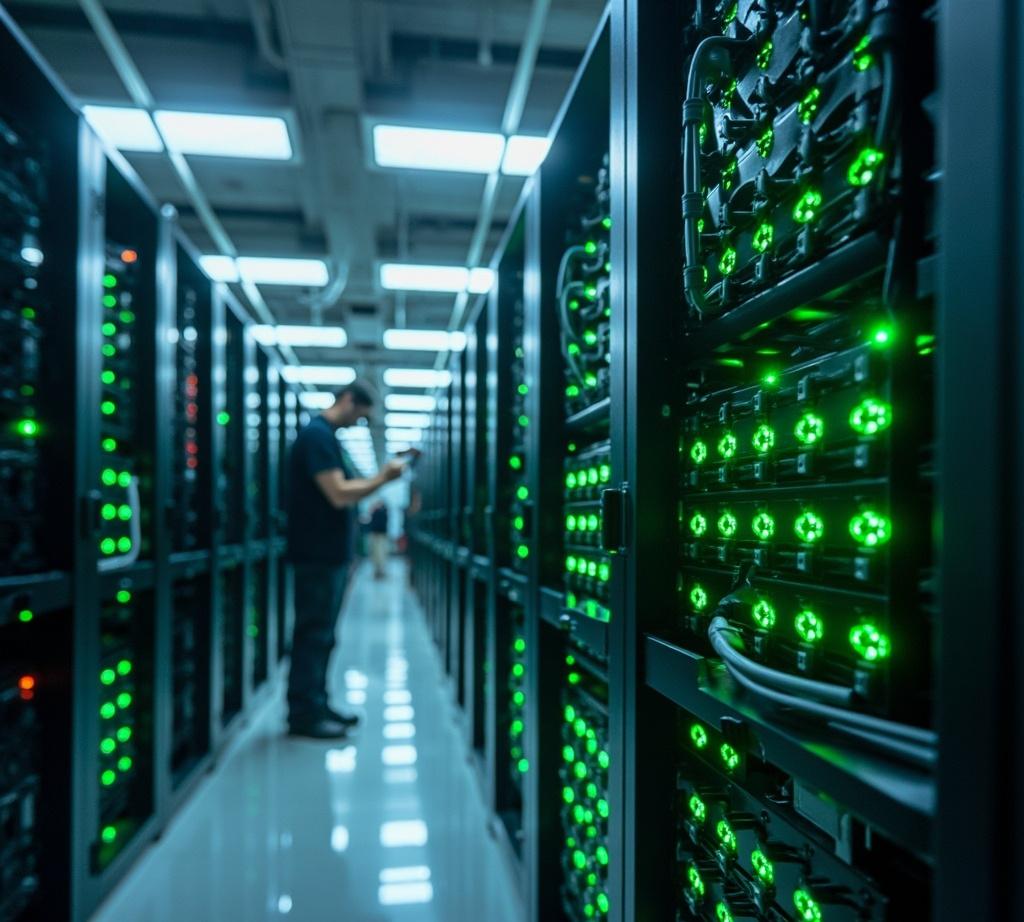
First, servers, storage, and networking gear — essentially the "big computers" enterprises use, the "warehouses" that hold their data, and the "highways" that let those machines talk to each other. Second, hybrid cloud and AI solutions, helping companies deploy data and applications across on-premises data centers and public clouds, plus the compute needed to train and run AI models. Third, edge computing and IoT, letting factories, retail outlets, and hospitals run AI models at the "field" level.
Think of HPE as the "utility company of enterprise IT infrastructure" — its customers are banks, governments, cloud providers, and large manufacturers. Not glamorous on a normal day, but whenever a company wants to upgrade or run AI, they can't sidestep HPE.
From $22 to $60: What Actually Happened?
Plotting HPE's recent trajectory, three key inflection points stand out.
The first is the Juniper Networks acquisition completed in early 2025. Juniper is a long-established enterprise networking vendor sitting alongside Cisco and Arista. HPE paid a hefty sum to acquire Juniper with one specific goal: filling the gap in high-speed "server-to-server" connectivity inside AI data centers. AI training routinely runs across thousands of GPUs simultaneously, and a network bottleneck drags down the entire cluster's efficiency. Whoever can package "compute + networking" together wins the big orders.
The second is the early-June 2026 earnings report. Looking at the trading volumes at that time, HPE registered eye-popping single-day volumes of 115 million and 153 million shares on June 1 and 2, with intraday price swings exceeding $10 — classic "earnings day" behavior. The market gave a very positive vote of confidence to HPE's AI server business, concluding that the Juniper integration was progressing smoothly and that AI order visibility was high.
The third is the most recent week. HPE shares rose from a July 30 close of $47.14 to $59.82 on August 13 — a cumulative gain of more than 27% in just over two weeks. August 12 was particularly dramatic, with a single-day surge of 8.1% and volume expanding to 22.4 million shares. August 13 extended the move, with intraday highs touching $63.44.
Why Is HPE Especially Strong Right Now?
The first catalyst is peer earnings spillover. During the August 12 session, market chatter noted that Lenovo's latest earnings release showed very strong AI server and infrastructure demand, triggering a sector-wide re-rating. HPE sits in the same AI server beneficiary bucket as Lenovo, AMD, and Dell — when peer numbers look good, the market automatically lifts HPE's forward estimates.
The second is technical breakout confirmation. HPE's August 12 long red candle took the stock directly from the $54 zone up past $58, accompanied by volume expansion — a clear sign of "new money flowing in." From the early-July lows, HPE has trended higher for more than six consecutive weeks with barely any meaningful pullback. This kind of "clean trend" is extremely attractive to trend-following traders.
The third is AI order visibility. HPE has repeatedly told investors on prior earnings calls that AI system order backlog has reached multi-billion-dollar scale, and that fiscal 2026 second-half AI server revenue is expected to see "explosive growth." For Wall Street, visibility matters more than current numbers — once you know the next few quarters are booked, valuations can be anchored on 2027 and 2028 earnings.
At Current Levels, Is It Still Chaseable?
This is the question everyone cares about. Let me break it down from three angles.
Valuation perspective: HPE's historical P/E has typically traded in the 8–15x range, mostly because the market previously classified it as a "low-growth, asset-heavy traditional hardware vendor." But as AI revenue mix rises, the market will gradually reframe its valuation logic into an "AI infrastructure growth stock," with reasonable P/E potentially migrating toward 18–25x. That implies upside even on modest earnings growth.
Technical perspective: Be careful here. HPE's share price is now more than 18% above its 20-day moving average, with the 14-day RSI above 76 — clearly in "overbought" territory. Overbought means the stock has run too far, too fast in the short term and is prone to a healthy 5%–10% pullback at any time. So "going all-in right here" is not a smart strategy. A more disciplined approach is to wait for a pullback to the 20-day moving average or a prior breakout zone before scaling in.
Positioning perspective: On August 12 and 13, two consecutive days posted volumes above 22 million shares — recent highs. This kind of volume signals fresh institutional money entering, but also means many short-term players are already taking profits. When volume expands but the stock can no longer make new highs, that's often the first warning sign.
Three Key Risks
First, AI order visibility may be overstated. If HPE's AI revenue growth in any upcoming quarter comes in below market expectations, the valuation de-rating will happen very fast, because the current price already prices in "rapid growth over the next two to three years."
Second, Juniper integration execution risk. Large M&A deals most fear "culture clashes plus customer attrition." If Juniper's legacy enterprise customers switch to Cisco or Arista after the ownership change, HPE's networking revenue will take a direct hit.
Third, valuation regime-change risk. HPE's narrative shift from "traditional hardware" to "AI growth stock" rests on the premise of a stable macro rate environment and sustained AI capex. If the Fed suddenly turns hawkish, or if hyperscalers cut their 2027 capex guidance, the entire AI infrastructure sector will face pressure-driven pullbacks.
How to Read HPE's Next Move?
For long-term investors, HPE is a company "whose narrative is in the middle of transforming" — no longer just "that boring server vendor," but potentially a key consolidator of enterprise AI infrastructure. As long as the Juniper integration goes smoothly and AI orders ship on schedule, this story can keep being told for another two to three years.
For short-term traders, the key right now is "don't FOMO at the top." A better strategy is to set predefined pullback entry zones — for example, wait for the stock to revisit the $54–$56 range and show a basing signal before scaling in. A break below the 50-day moving average should be treated as the trend pausing, and exiting to observe is the prudent move.
Regardless of which camp you're in, HPE's run from $22 to $60 has already told us one thing: in the AI wave, the real winners may not always be the flashiest chip names — they could be the quietly consolidating infrastructure players. That said, the market's applause always goes to whoever gets the timing right — entry timing matters more than direction.
⚠️ Disclaimer: This article is for educational purposes only and does not constitute investment advice. Investing involves risk.
🎯 Quick Quiz
Finished reading? Test what you remember
Question 1/5
What are HPE's three core business areas according to the article?
✗ Incorrect
Your answer:—
Correct answer:A. Servers/storage/networking, hybrid cloud & AI solutions, edge computing & IoT
💡 The article explicitly lists HPE's three core things: (1) servers, storage, and networking gear; (2) hybrid cloud and AI solutions; (3) edge computing and IoT.