What Is a Hyperscale Cloud? The Full Guide to AI's Compute Backbone
A hyperscale cloud is the massive infrastructure underpinning the AI revolution. This guide explains its definition, architecture, the three-big-player landscape, the capex tsunami, and the geopolitical and power-constraint risks shaping the trillion-dollar industry.
What Is a Hyperscale Cloud? The Full Guide to AI's Compute Backbone
Open any AI industry report and the word "hyperscaler" appears on almost every page. Morgan Stanley now expects hyperscaler capex to grow from $426B in 2025 to roughly $1.4T by 2028. New York Governor Hochul signed an executive order freezing new "hyperscaler" data centers above 50MW. Nvidia even put $1B into Korea's Naver to "reach beyond hyperscalers." But what exactly is a hyperscale cloud, and why does the entire AI stack eventually rest on its shoulders?
1. Definition: Not Your Regular Cloud
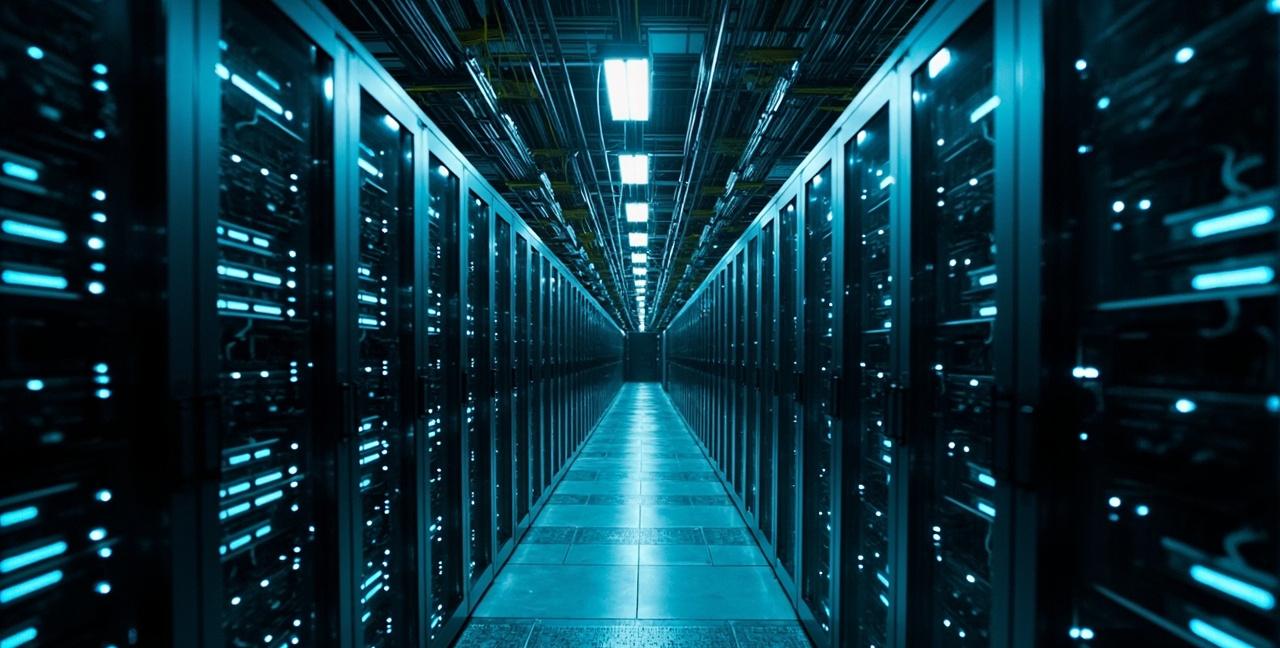
A hyperscale cloud refers to operators running hundreds of thousands to millions of servers, single campuses drawing 50MW+ of power, proprietary submarine cables, and globally standardized cloud services. There is no single international threshold, but the industry commonly uses these characteristics:
- 50MW+ capacity per single data center (the exact line New York used in its moratorium)
- Dozens to hundreds of campuses across multiple countries
- Highly automated, API-first service delivery
- Custom silicon, custom networking gear, custom storage systems
The "hyperscaler big three" most often cited are Amazon AWS, Microsoft Azure, and Google Cloud (GCP). Oracle Cloud Infrastructure (OCI) and Alibaba Cloud are usually placed in a second tier. As one industry commentator bluntly put it: "The hyperscaler big three are really flying" — that is the kind of momentum these three carry when cloud meets AI.
The more recent "neoclouds" — CoreWeave, Nebius, Lambda — may be GPU-first clouds, but their single-campus scale, owned-facility ratio, and long-term contract structures still fall well short of true hyperscalers, so they are usually treated as neighbors or customers rather than peers.
2. Architecture: The Engineering Behind Hyperscale Economics
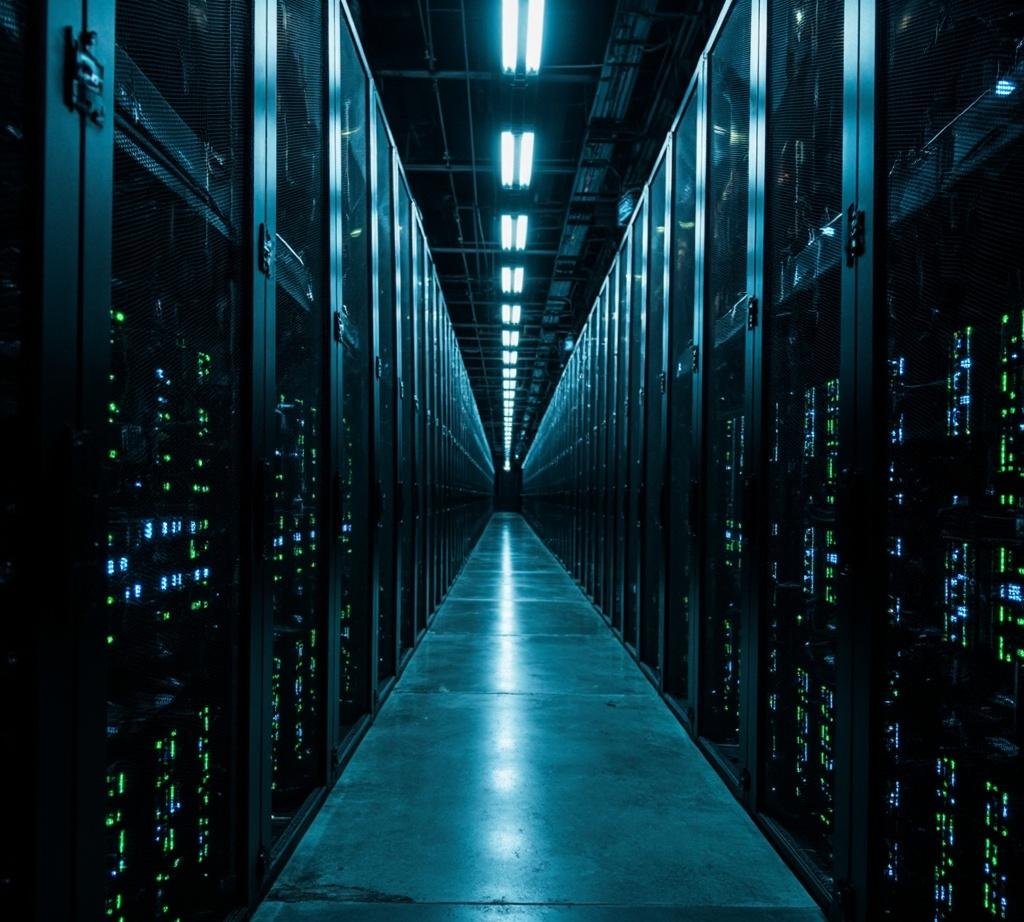
The reason hyperscalers can drive unit compute cost so low is not a single trick but a fully standardized, scaled engineering system:
- Hardware layer: Drop custom builds, deploy nearly identical x86 or Arm servers. Racks, power, and cooling are fully modularized for bulk procurement and bulk repair.
- Networking layer: Custom switches (e.g. AWS Nitro, Google Jupiter) and Data Center Interconnect (DCI) fiber compress cross-campus latency to single-digit milliseconds.
- Storage layer: Custom distributed object stores (S3, GCS, Azure Blob) turn data into a programmable resource instead of a hardware asset.
- Software layer: Kubernetes, virtualization, and function compute are all API-driven; customers pay per usage while hyperscalers cut marginal cost through scale purchasing and automated operations.
The essence of this stack is converting "compute" from a capital good into an elastically subscribed utility — very much like water or electricity. That is exactly why the world has almost no alternative but to rent from hyperscalers when AI training demands thousands of GPUs running in lockstep for one or two months.
3. Why AI Cannot Bypass the Hyperscalers
By 2026, the AI race is no longer just a model race — it is a compute supply-chain race. The role hyperscalers play in AI infrastructure is far deeper than most people realize:
- Microsoft Azure is the core training and inference platform for OpenAI and Anthropic. Industry chatter cites Azure running on a $75B annualized revenue base with 40% YoY growth, while Microsoft FCF is projected to nearly triple from ~$55B in 2027 to ~$165B in 2030, mostly as Copilot converts heavy capex into high-margin AI revenue.
- AWS is the default for Anthropic and many startups, and it is reducing Nvidia dependence with its own Trainium and Inferentia silicon.
- Google Cloud serves both internal DeepMind and external customers, with TPU being one of the most mature hyperscaler custom-silicon lines.
- Oracle Cloud Infrastructure (OCI) has become the "fourth pillar" thanks to multi-year contracts with OpenAI and xAI.
In practice, every major AI company — model layer (OpenAI, Anthropic, Gemini, xAI) or application layer (Cursor, Perplexity, enterprise Copilots) — sits on a hyperscaler's shoulders. That is why the first thing the market scrutinizes whenever AI capex anxiety surfaces is the capex guidance from these very companies.
4. The Capex Tsunami: Money and Debt on Both Sides
How hard is hyperscaler money flowing? Morgan Stanley's latest model puts hyperscaler capex at roughly $426B in 2025 and projects it to approach $1.4T by 2028 — more than tripling in three years. This is no longer tech capex; it is sovereign-grade industrial investment.
A few numbers worth remembering:
- BofA's July Fund Manager Survey: 61% of investors do not expect AI hyperscalers to cut capex this year; only 28% do.
- Goldman Sachs warns that the AI capex boom has raised the risk that "large-cap tech profitability slips before AI returns are realized," and momentum factors just saw one of their "most violent unwinds since the early 2000s."
- Credit markets are also tightening: AI debt insurance costs have hit all-time highs, hyperscaler credit spreads continue to widen, and Seoul's two-day crash has been read as a leveraged spillover of that risk.
In other words, hyperscaler expansion is not without a cost. On one side, cash flow and ROIC will be tested over a multi-year horizon; on the other side, financing pressure from bond issuance, equity raises, and AI debt insurance is rising simultaneously. That is why BofA's same survey also shows market disagreement over whether capex will suddenly be cut is widening.
5. Geopolitics and the Power Ceiling
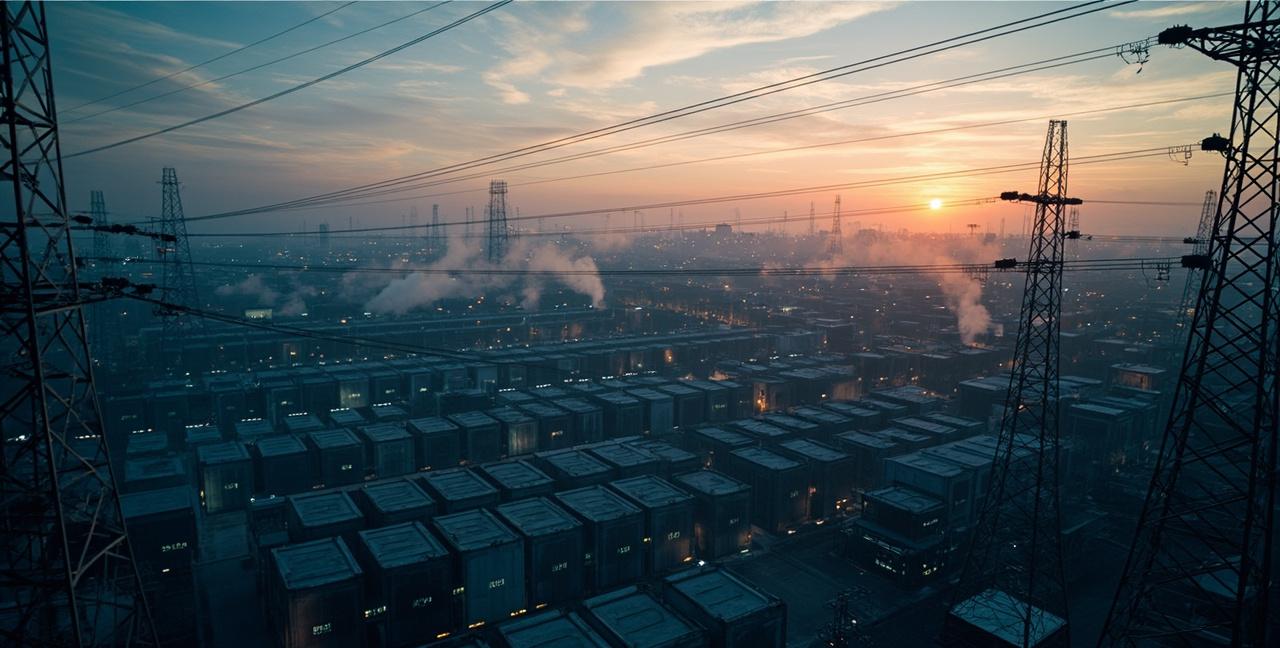
When a single data center can consume as much power as a mid-sized city, "compute" stops being purely a technology topic and becomes a national-resource topic. In the second half of 2026, several events pushed this tension into the spotlight:
- New York Governor Hochul signed an executive order making New York the first U.S. state to halt new hyperscaler data centers above 50MW for one year. Already-permitted projects are exempt. Stocks affected include NBIS, CRWV, IREN, CIFR, and other neocloud / colo operators.
- Texas Governor Abbott publicly required Microsoft and others to "comply with data center standards," signaling that state-level regulators are gaining leverage.
- PJM, the largest U.S. grid operator, openly asked for the flexibility to "temporarily cut data center power" in grid emergencies — effectively admitting that power supply is approaching its ceiling.
- Fed Governor Barkin noted in public remarks: "AI investment seems impervious to the level of rates," but also that "some inflation drivers, including AI itself, could be persistent."
Together these signals show that the next decade of hyperscaling will not just be about chips and models — it will be about who can secure land, water, power, and regulatory permits. It is precisely against this backdrop that Nvidia is investing $1B in Naver to take AI compute "beyond the hyperscaler wall," and that sovereign AI projects in Saudi Arabia, the UAE, and elsewhere are appearing one after another, all searching for new compute footholds under mounting geopolitical pressure.
6. Outlook: Sovereign AI and the Neocloud Wave
Hyperscale cloud is not slowing down, but its competitive structure is changing. Three themes are worth tracking:
- Sovereign AI clouds: Governments want models and data kept within borders. Saudi Arabia, the UAE, India, and Europe have all signaled cooperation with hyperscalers or major chipmakers to build sovereign clouds — a new customer base for hyperscalers, and a new political risk to manage.
- Neocloud and GPU colocation: CoreWeave, Nebius, Lambda and other GPU-focused clouds are breaking through on agility and startup customers. They are far smaller than the hyperscalers, but they are growing fast as AI inference explodes.
- The custom-silicon war: AWS Trainium, Google TPU, Microsoft Maia / Cobalt, and Alibaba's T-Head are all pushing custom ASICs to hedge against Nvidia's pricing power. This line will directly determine capital returns for the next three to five years.
Closing
So what is a hyperscale cloud? It is not just a label for AWS, Azure, and GCP — it is the compute backbone of the entire AI revolution; a capital project that burns hundreds of billions of dollars each year, pulls in power grids and geopolitics, and is still accelerating. To understand hyperscalers is to understand the single most important theme in tech and capital markets for the next decade.
🎯 Quick Quiz
Finished reading? Test what you remember
Question 1/5
What is the single-campus power capacity threshold that New York used in its hyperscaler data center moratorium?
✗ Incorrect
Your answer:—
Correct answer:C. 50MW+
💡 The article states that New York Governor Hochul signed an executive order freezing new 'hyperscaler' data centers above 50MW, and lists 50MW+ capacity per single data center as the first industry characteristic.