The Mental Discipline of Gold Traders: From Mindset Building to Emotional Management
In the world of intraday gold trading, what truly keeps traders surviving in the long run has never been magical indicators or guaranteed-win strategies, but rather a simple, executable, and repeatedly verifiable discipline framework. This article deeply breaks down the three root causes of trading psychology and their practical response methods.
Why Is Psychology More Important Than Technique?
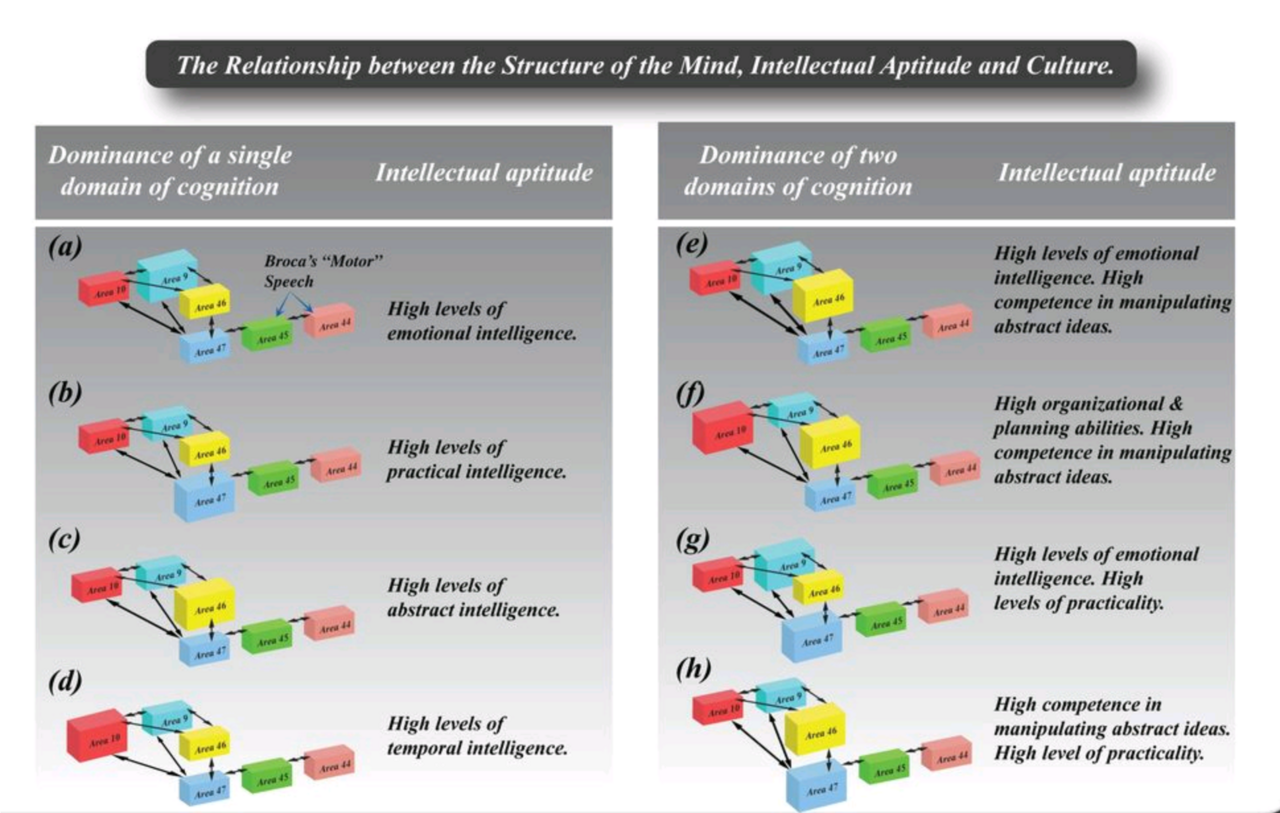
*The relationship between brain structure and emotional intelligence — traders with high EQ find it easier to maintain discipline.*
In the world of intraday gold (XAUUSD) trading, countless "guaranteed-win strategies," "mystery indicators," and "insider tips" circulate. But what truly allows a trader to survive in the market over the long run has never been any of these flashy things — it's a simple, executable, repeatedly verifiable discipline framework.
"The more you trade, the more chances you have to lose. Discipline is the trader's only friend."
This article starts from the most core entry framework, then progressively expands into risk management, trading psychology, platform operations, intraday trading routines, automated trading (EA), common failure patterns, and other topics. Every topic will be fully broken down from "why do it" to "how to do it" and finally to "common pitfalls."
"The most important thing is to find a strategy that suits your rhythm, stick with it persistently, and repeatedly refine — then you will succeed!"
What Is Discipline?
Many people mistakenly believe that discipline means "holding back" — not acting when you shouldn't. But true discipline means decisively acting when you should, and absolutely not entering when you shouldn't — both are indispensable.
Imagine this: you see gold suddenly surge $50, your heart races, and your fingers instinctively want to click "buy" — at this moment, discipline tells you: wait. First understand the trend clearly, find support, wait for confirmation. "Waiting" is discipline, and "acting" is also discipline.
Why Isn't Technical Analysis Enough?
Technical analysis (charts, indicators, candlestick patterns) is a tool, and tools themselves are lifeless. If you show the same chart to 10 traders, you'll get 10 different interpretations — but only those interpretations backed by discipline can truly translate into profits in the market.
Common misconceptions include:
- Overtrading: After consecutive losses, rushing to "get revenge," resulting in increasingly poor trades
- No trading plan: Charging in whenever you see an "opportunity," forcing entries even without signals
- Ignoring stop-losses: Refusing to admit mistakes when losing, turning small losses into large ones
- Overconfidence: After a few consecutive wins, thinking you're a genius and steadily increasing position size
These are all manifestations of lacking discipline. No matter how many charts you've studied, without enough discipline, everything is false.
The First Question for the Reader
Before you begin reading, please ask yourself one question first:
Were your past losses due to "poor technique," or "insufficient discipline"?
The vast majority of people will discover: they've learned plenty of technique, but their execution doesn't keep up; the strategy is clearly correct, yet at the critical moment they make the wrong decision. The answer to this question is the key to stepping through the door of consistent profitability.
Overtrade: The Root of Slow Suicide
"Seriously overtraded."
These five short words capture the predicament of countless traders. When you sit staring at the screen, wanting to catch every small fluctuation, every tick in gold price feeling like an opportunity — at this point, you're no longer a trader; you're a puppet controlled by emotions.
The Three Major Psychological Roots of Overtrade
First, Revenge Trading
Revenge trading is one of the most common causes of overtrade. When you lose two or three trades in a row and your account shrinks, a strong "I want it back" urge rises in your heart. You'll think: "I can't lose like this, I need to win it back quickly." So you rush into a position, expecting "it'll bounce back in a moment," and the result is usually another slap from the market.
The psychological mechanism behind this mindset is very clear: losses trigger the brain's "loss aversion" mechanism, making the pain of losses far exceed the pleasure of gains. To relieve this pain, you unconsciously want to act immediately — even when the action itself is wrong.
Second, Boredom Trading
You might be in a good mood today, your account has no major issues, but simply because you have "nothing to do" or "want some excitement," you casually open a trade. This kind of overtrade stems from a psychological sense of emptiness or loneliness — the market becomes a form of entertainment at this point, rather than an investment tool.
"Learning how to stop overtrading."
— Learning how to avoid overtrade is itself something that requires deliberate practice. Many traders have this problem early on: they believe the longer they stare at charts, the faster their technique improves. In reality, excessive screen-watching only exhausts your nervous system and drives your judgment straight down.
Third, Overconfidence
When you've won several trades in a row, your confidence inflates and you begin to feel you're a born trading genius, feeling the market has been figured out by you. At this point, the form of overtrade becomes: positions getting larger and larger, entry reasons getting more and more far-fetched, signals getting more and more vague.
"The more you trade, the more chances you have to lose. It's a law."
— The reason this statement is called a law is that it's not influenced by any human factors. Even if you're in great shape and bursting with confidence today, as soon as you start overtrading, you're creating opportunities for the market to harvest you.
The Actual Destructive Power of Overtrade
Suppose your expected value per trade is +$5 (meaning on average you make $5 per trade) — it looks like a positive-expectancy strategy. But if your overtrade behavior causes you to make 10 extra invalid trades per day, the cost of those 10 trades (spreads, slippage, emotional mistakes) might be -$50. Then your total expectation becomes ($5 × 5) + (-$50) = -$25. You've gone from positive expectancy to negative.
This is the mathematical essence of overtrade: it won't make you earn more; it will only cause you to exhaust all the edge you've painstakingly researched into friction costs and emotional mistakes.
Psychological Triggers: Revenge Trading, Loss Aversion, FOMO
Revenge Trading — The Market's Emotion Killer
Revenge trading isn't as simple as "wanting to win it back." Its psychological mechanism involves deeper brain operations. When you suffer a loss, your brain's amygdala triggers a "fight or flight" response, putting you in a state of high alert and emotionality.
Typical symptoms of revenge trading:
- Entering without a clear entry reason, purely "feeling it should bounce back any moment now"
- Position size larger than usual, trying to cover all losses with one trade
- Ignoring stop-losses, or simply not setting them
- Trading frequency surging dramatically in a short time
To overcome revenge trading, the first thing you must do is: admit you're emotional. When you feel angry, frustrated, or anxious after a loss, these emotions are completely normal and don't need to be suppressed. The key is: don't make any trading decisions while these emotions are running high.
One effective approach is: when you lose more than a certain threshold within an hour (say, 2% of your account), immediately force a break for 30 minutes to 2 hours. During this time, don't watch the charts, don't scroll your phone — just do something unrelated to trading, and let your prefrontal cortex (the region responsible for rational decision-making) come back online.
Loss Aversion — The Hardest Human Weakness to Overcome
Research by psychologists Daniel Kahneman and Amos Tversky shows that the pain people feel from losses is on average 2 to 2.5 times the pleasure of an equivalent gain. This is the so-called loss aversion.
In gold trading, this psychological bias leads to two typical behaviors:
First, difficulty with stop-losses. Many traders would rather hold a losing position "all the way home" than cut it, because they "don't want to admit failure." But in the forex and gold markets, a wrong position won't automatically become right just because you refuse to admit it. You simply turn unrealized losses into realized losses, while also losing the opportunity cost of the time that money could have been used elsewhere.
Second, taking profits too early. Because losses are painful, when the account shows a little profit, the brain strongly suggests "let's secure it in the pocket first," causing you to close too early and miss the big move. Kahneman's research shows that people tend to be risk-averse in the face of certain gains, preferring to earn less in order to lock in the gain.
To combat loss aversion, you need a mechanized trading plan that clearly states stop-loss levels and profit targets — and this plan must be made when your emotions are calm. After entering, execute the plan strictly; don't let emotions interfere with execution.
FOMO — Fear of Missing Out
FOMO is one of the most common psychological traps for gold traders. When price breaks out sharply upward, you'll see one "CALL" message after another scrolling by, your heart races, you fear missing this wave, so you rush to chase highs and enter.
"It'll bounce back in a moment."
— The psychology behind this statement is actually a mix of fear of missing out and overconfidence. Price has already moved far, yet you believe "it should bounce back about now." This belief has no technical-analysis foundation; it's purely a psychological wishful thinking.
The key to overcoming FOMO is: establish clear, objective entry criteria. When an entry point doesn't meet your criteria, even if there are a hundred people around shouting direction, you don't enter. This requires tremendous confidence and independent judgment — but this is exactly a quality a successful trader must possess.
Overconfidence
Overconfidence in trading manifests as:
- Believing your analysis is more accurate than market consensus
- Entering based on "intuition" without any strategic basis
- Position size exceeding normal proportions
- Ignoring risk management principles
The solution: regularly review your trading records and let the data speak. If your win rate over the past 20 trades is 40%, but you think you're a "master," that gap is overconfidence at work. Numbers don't lie; they give you an objective self-assessment.
The "Mood Check" List Before Trading
Before you open MT5 or place any order, take 30 seconds to ask yourself:
- What is my primary emotional state today? If it's anger, frustration, anxiety, or excessive excitement, deal with the emotions first before considering trading
- What are the sources of stress in my life? Work issues, family conflicts, lack of sleep — these will quietly affect your judgment
- What was my emotional state when I last entered? If the last one was revenge trading or a wrong overtrade, be extra careful today
- Is my account situation affecting my judgment? If the account has suffered severe recent losses, you may be in a "stem the bleeding" mindset — this is a dangerous psychological state
If any of the above questions leaves you uncertain, then today's trading plan is: make no new entries.
The Importance of Downtime
Trading is not something you can do 24 hours a day. The market has its own rhythm — London session, New York session, Asian session. Rather than stubbornly staring at the screen until late at night, it's better to decisively shut down during non-strategic sessions.
Benefits of downtime:
- Let the brain recover its judgment: After more than 4 hours of continuous work, prefrontal cortex activity drops significantly, and your decision quality deteriorates steadily
- Avoid overtrade: Non-essential sessions are often the easiest time to make mistakes, because volatility may be lower and false signals increase
- Protect quality of life: Trading is for a better life, not the entirety of life
A trader once shared this habit: setting a daily "closing time," for example, after the London session closes (4:00 AM Hong Kong time), no more chart-watching or new trades. This simple rule helped him avoid most of the low-quality action in the Asian session.
Why a "Sit-It-Out" Mindset Will Destroy Your Account
Some traders have this mindset: "I have to do something today; I can't come away empty-handed." This is the so-called "sit it out" mindset — sitting in front of the computer until the market closes, constantly entering, closing, then entering again, always feeling you must "do" something to put your mind at ease.
The psychological mechanism behind this mindset is: confusing "trading activity" with "trading results." Being busy doesn't equal being effective; entering doesn't equal profiting. Sitting in front of the screen for 8 hours doesn't mean you're "working hard" — you're most likely just accumulating fatigue and emotional pressure.
The correct approach is: set a daily "trading window" — for example, the morning Asian session for focused research, the afternoon European session for observing the market, and the evening US session for waiting for opportunities. Outside the window, don't watch charts and don't make any trading-related decisions.
How to Adjust Your Mindset After a Loss
Loss is part of trading. You must accept this fact, or you're not suited to trading.
Adjustment steps after a loss:
- Stop immediately: After a loss, don't rush back in to "get revenge." First stabilize your account and your emotions
- Analyze the cause of the loss: Is it a technical problem (bad entry point)? A discipline problem (no stop-loss set)? A psychological problem (emotional entry)? Or simply market randomness? Distinguishing these causes is the only way to apply the right remedy
- Don't let a single day's losses affect your long-term plan: One trade should not define your entire mood
- Write it down: Record the full details of this loss (entry reason, position size, emotions at the time, final outcome) in your trading journal
Conclusion
Trading is a marathon, not a 100-meter sprint. Winning once isn't hard; the hard part is winning many times. And the prerequisite for "winning many times" is an executable discipline framework, plus strict execution day after day.
Keep these core principles in mind:
- The more you trade, the more chances you have to lose. It's a law.
- Find a strategy that suits your rhythm, stick with it persistently, and repeatedly refine — then you will succeed!
- Losses aren't scary; what's scary is not knowing why you lost.
- The market doesn't lack opportunities; it lacks the discipline to wait for them.
When you can beat most traders psychologically, the power of technical analysis and money management will truly be unleashed. Because the ultimate competition in the market is not about who has the better indicators — it's about who has the steadier mindset, who has the stricter discipline, and who can stay calm when others are fearful and stay restrained when others are greedy.
⚠️ Disclaimer: This article is for educational purposes only and does not constitute investment advice. Investing involves risk.
🎯 Quick Quiz
Finished reading? Test what you remember
Question 1/5
According to the article, what is the defining feature of true discipline in a gold trader?
✗ Incorrect
Your answer:—
Correct answer:B. Decisively acting when you should and absolutely not entering when you shouldn't
💡 The article explicitly states that true discipline means 'decisively acting when you should, and absolutely not entering when you shouldn't — both are indispensable.' It emphasizes that waiting is discipline and acting is also discipline.