
MRNA (Moderna) Investment Analysis: The mRNA Platform Bet — Can Cancer Vaccines Turn Things Around?
Moderna's 2025 full-year revenue: $1.94 billion; net loss: $2.8 billion. Revenue was cut in half after the COVID-19 surge subsided, and its CMV vaccine failed in Phase III. However, the personalized cancer vaccine mRNA-4157, co-developed with Merck, is about to release key Phase III data — if successful, a multi-billion-dollar oncology market would open up. The company holds $6 billion in cash and targets cash-flow breakeven by 2028.
Moderna: The Dream and Harsh Reality of the mRNA Platform
Moderna (NASDAQ: MRNA) is a pioneer in mRNA technology. It became an overnight sensation during the pandemic thanks to its COVID-19 vaccine Spikevax, with a market cap that once approached $200 billion. But as COVID-19 demand receded, revenue collapsed and the stock has fallen more than 80% from its peak.
Current data:
- 2025 full-year revenue $1.94 billion (vs. 2022 peak of $19.3 billion)
- Net loss $2.82 billion
- Cash burn ~$2 billion/year
- Cash reserves ~$6 billion
- Stock price ~$64 (June 2026), market cap ~$25 billion
Core question: Is Moderna an "mRNA platform company" or "just a vaccine company"? If the cancer vaccine mRNA-4157 succeeds clinically → a tens-of-billions market opens up. If it fails → Moderna may simply be a cash-burning biotech.
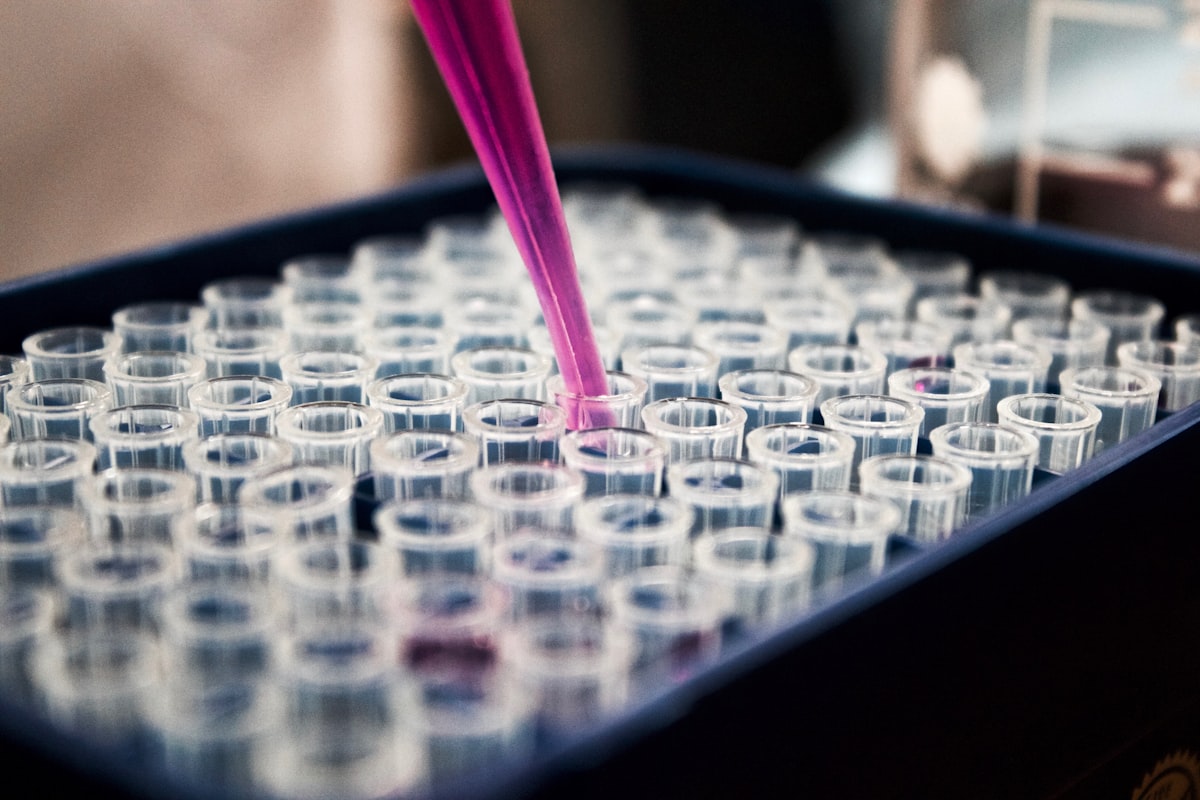
*The core advantage of mRNA technology: new vaccines/therapies can be designed rapidly — once the target protein sequence is known, a candidate drug can be synthesized within weeks.*
1. Breaking Down the mRNA Platform Business Model
① Approved Respiratory Vaccines — Current Revenue Source
| Product | Status | Market Performance |
|---|---|---|
| Spikevax (COVID-19) | Iterative version mNEXSPIKE launched | Demand continues to decline |
| mRESVIA (RSV) | Launched | Sales far below expectations ⚠️ |
| Influenza vaccine | Phase 3 | Filing planned for 2026-2027 |
| Flu + COVID-19 combination vaccine | Phase 3 | Greatest commercial potential |
Profitability logic:
- Government procurement + self-paid vaccination → sales revenue
- Standardized mRNA manufacturing → long-term gross margin target 75-80%
- Global manufacturing capacity (built during the pandemic) + LNP lipid delivery patents → technology moat
- mRNA platform advantage: new vaccines can be designed within weeks once the virus sequence is known
Reality check:
- COVID-19 vaccine revenue plunged from $19.3 billion (2022) to ~$1.5-2 billion/year
- mRESVIA RSV vaccine sales far below Pfizer's Abrysvo and GSK's Arexvy
- Influenza vaccine market is fiercely competitive (Sanofi, GSK and other giants already entrenched)
② Long-Term R&D Pipeline — Three Major Tracks
Track 1: Infectious Disease Vaccines
| Candidate | Status | Notes |
|---|---|---|
| Norovirus mRNA-1403 | Phase 3 | Globally urgent need, no existing vaccine |
| CMV vaccine mRNA-1647 | Phase 2 (transplant) | ⚠️ Phase 3 already failed |
| EB virus | Phase 1 | Early stage |
The CMV Phase 3 failure was a major blow to Moderna — it was originally viewed as the largest post-COVID commercial product.
Track 2: Cancer Immunotherapy (🔥 Biggest Catalyst)
| Candidate | Partner | Status | Market Potential |
|---|---|---|---|
| mRNA-4157 (personalized cancer vaccine) | Merck | Phase 3 ongoing | Tens-of-billions 🔥🔥 |
Why does mRNA-4157 matter?
- Used in combination with Keytruda (Merck's PD-1 inhibitor)
- Phase 2b five-year follow-up data: melanoma recurrence risk reduced by ~50% 🔥
- Pivotal Phase 3 data expected in the second half of 2026
- If successful → world's first mRNA cancer vaccine launched → opens up a $50-100 billion oncology market
mRNA-4157 is Moderna's "turnaround card." Success = transformation from "declining vaccine company" to "cancer immunotherapy leader." Failure = stock could fall another 50%.
Track 3: Rare Disease mRNA Therapies
| Candidate | Disease | Status | Significance |
|---|---|---|---|
| mRNA-3927 | Propionic acidemia (PA) | Phase 1/2 | First mRNA metabolic therapy |
| mRNA-3705 | Methylmalonic acidemia (MMA) | Phase 1/2 | Genetic disease treatment |
Rare disease therapies would transform Moderna from a "vaccine company" into an "mRNA therapeutics company" — opening up a completely different market.
Overall Operating Logic
Short term (2026): Seasonal respiratory vaccines maintain baseline revenue
Medium term (2027-2028): Flu / combination vaccine launch + norovirus vaccine
Long term (2028+): Cancer vaccine (if successful) + rare disease therapies → second growth curve
Goal: Achieve cash flow breakeven by 2028
2. Latest Fundamental Data

2025 Full-Year Financial Summary
| Metric | 2025 Full Year | 2024 Comparison |
|---|---|---|
| Total revenue | $1.94 billion | $3.3 billion (continued decline) |
| Net loss | -$2.82 billion | -$3.6 billion (slight improvement) |
| Cash burn | ~$2 billion/year | At high levels |
| Cash reserves | ~$6 billion | Adequate but continuing to decline |
| Operating expense reduction | Target $1.5 billion/year | Ongoing layoffs ✅ |
2026 Guidance
| Metric | 2026 Guidance | Interpretation |
|---|---|---|
| Revenue growth | Upper limit +10% | Low growth ⚠️ |
| RSV vaccine | Far below expectations | Weak competitiveness |
| CMV vaccine | Phase 3 already failed | Impaired ❌ |
| Cost reductions | $1.5 billion expense reduction plan | In execution ✅ |
Valuation Metrics (June 2026)
| Metric | MRNA | Interpretation |
|---|---|---|
| Stock price | ~$64 | More than -80% from peak |
| Market cap | ~$25 billion | Below cash × revenue reasonableness? |
| 52-week range | $40-$120 | High volatility |
| P/S | ~10x | Elevated (considering losses) |
| Cash / market cap ratio | ~24% | Has a safety cushion |
3. Bull vs. Bear Investment Logic
🟢 Bullish Catalysts
1. Broad applicability of the underlying mRNA platform
mRNA technology isn't limited to vaccines — it can also be used for therapeutics (rare diseases, oncology). The value of this platform far exceeds any single product. Once one product succeeds → many derivative products can be rapidly advanced.
2. Cancer vaccine partnership with Merck = tens-of-billions opportunity
mRNA-4157 Phase 2b data was strong (melanoma recurrence risk reduced ~50%). If Phase 3 succeeds → world's first mRNA cancer vaccine → combined use with Keytruda (annual sales $25 billion+) = mega blockbuster. Merck's commercialization capability = rapid global rollout.
3. Flu + COVID-19 combination vaccine = annual recurring vaccination
If "one shot covering flu + COVID" launches successfully → annual autumn vaccination = recurring revenue stream. US influenza market ~$5-8 billion/year.
4. $6 billion in cash + cost reductions = no near-term funding risk
Even with annual burn of $2 billion, $6 billion in cash = 3 years of runway. And the cost reduction plan is being executed → cash burn rate is declining.
5. AI-assisted mRNA sequence design
AI can dramatically shorten mRNA sequence optimization time → clinical development cycle compressed from years to months → faster pipeline advancement.
6. Norovirus vaccine — globally urgent need
Globally, ~700 million people are infected with norovirus each year, and there is currently no approved vaccine. If mRNA-1403 succeeds = world's first = monopoly market.
🔴 Core Risks
1. Revenue heavily dependent on respiratory vaccines — COVID-19 recedes = revenue halves
2022 revenue $19.3 billion → 2025 $1.94 billion. A decline of 90%. And RSV vaccine sales are far below expectations → new products have not been able to fill the COVID-19 revenue gap.
2. Extremely high clinical failure risk — CMV has already failed
The CMV Phase 3 failure proved that mRNA technology is not a panacea. If mRNA-4157 Phase 3 fails → the stock could drop 50%+. Biotech's clinical failure rate is an objective reality.
3. Weak competitiveness in RSV vaccines
Pfizer's Abrysvo + GSK's Arexvy already dominate the market. Moderna's mRESVIA sales are far below expectations → proving Moderna's commercialization capability lags behind traditional pharma giants.
4. Intensifying competition in the mRNA space
BioNTech (partnered with Pfizer), CureVac, and domestic biotech players are all catching up. Patent litigation risks persist (Arbutus/LPIC vs. Moderna LNP patent suit).
5. US anti-vaccine sentiment + tightening CDC vaccination guidelines
The US anti-vaccine movement (RFK Jr. as HHS Secretary) may shrink the vaccine market. If the CDC tightens vaccination guidelines → government procurement declines → directly impacts revenue.
6. Continuous cash burn — a ticking time bomb
Annual burn of $2 billion. If new products fail to scale → $6 billion in cash burns through in 3 years → requiring financing (dilution) or cutting R&D (abandoning pipeline).
7. Government public health budget cuts
After the pandemic ended, governments around the world cut vaccine procurement budgets sharply. Procurement prices fell → Moderna's profit margins are being squeezed.
4. Comprehensive Investment Verdict
Short-Term Event Speculation (1-6 months): ⚠️ Extremely High Volatility
| Factor | Assessment |
|---|---|
| Catalyst | mRNA-4157 Phase 3 data (2026 H2) = stock price nuclear catalyst |
| Volatility | Extremely high (clinical data = binary outcome: success doubles / failure halves) |
| Strategy | Event-driven — only if you're willing to bet on clinical results |
| Risk | The CMV failure precedent |
Short-term trading core: around the mRNA-4157 Phase 3 data release = most volatile moment for the stock. Success → potentially +50-100%; failure → potentially -40-60%.
Long-Term Value Allocation (3-5 years): Two Scenarios
Scenario A: Cancer vaccine succeeds (probability ~40-50%)
| Metric | Expectation |
|---|---|
| Stock direction | +100-300% |
| Logic | mRNA-4157 launches → tens-of-billions oncology market → platform value validated → more derivative products |
| Inflection point | Transformation from "cash-burning vaccine company" to "profitable mRNA therapeutics company" |
Scenario B: Cancer vaccine fails / mediocre data (probability ~50-60%)
| Metric | Expectation |
|---|---|
| Stock direction | -30-60% |
| Logic | Loses biggest catalyst → only respiratory vaccines remain → revenue continues declining → cash burn accelerates |
| Risk | May take 2-3 years to find a new growth driver |
Long-term positioning thoughts:
- High-risk speculators: If you believe mRNA-4157 will succeed → $64 now is a "lottery ticket price." Success yields huge returns, failure means manageable stop-loss
- Biotech enthusiasts: Long-term value of the mRNA platform > any single product. If you believe mRNA will transform medicine → hold long-term
- Not suitable for: Income investors, conservative investors, anyone unable to withstand -50% volatility
Key Indicators to Monitor
| Indicator | Watchpoint | Why It Matters |
|---|---|---|
| mRNA-4157 Phase 3 data | 2026 H2 release | Life-or-death catalyst 🔥🔥 |
| Quarterly cash burn | Every quarter | Length of runway |
| Respiratory vaccine sales | Every quarter (autumn/winter) | Baseline revenue |
| RSV vaccine market share | Every quarter vs. Pfizer/GSK | Commercialization capability |
| Norovirus Phase 3 progress | Data release timing | New product catalyst |
| Flu / combination vaccine approval | FDA progress | 2027 launch possibility |
| Cost reduction execution | Quarterly OpEx | 2028 profitability path |
| US vaccine policy | CDC/HHS announcements | Market environment |
| LNP patent litigation | Court rulings | Potential damages risk |
Conclusion: The Ultimate Test of the mRNA Platform
Moderna's investment thesis can be distilled into one question:
"Can mRNA technology extend beyond COVID-19 vaccines and become a universal medical platform?"
- If yes → Moderna is the next Genentech (from biotech newcomer to pharma giant)
- If no → Moderna is just a "pandemic红利 stock" whose best days are behind it
The answer lies within the mRNA-4157 Phase 3 data.
In the second half of 2026, this data will tell the world:
- Can mRNA technology treat cancer?
- Is Moderna a "platform company" or a "vaccine company"?
- Is the $64 stock price "cheap" or "still not cheap enough after the fall"?
Moderna today is like Tesla in 2016 — technologically leading but persistently unprofitable, with everyone waiting for the "Model 3 moment." mRNA-4157 is Moderna's Model 3. If delivery succeeds → the sky is the limit. If delivery fails → it may take many years to recover.
Investing in Moderna is not investing in its current financials — you're investing in the possibility of mRNA technology transforming medicine. This is a gamble, but if you believe in mRNA, the odds may be worth it.
Final advice: control your position size (2-5%), be mentally prepared for a wipeout, and then wait for the clinical data in the second half of 2026. That's the right way to invest in MRNA.
⚠️ Disclaimer: This article is for educational purposes only and does not constitute investment advice. Investing involves risk.
🎯 Quick Quiz
Finished reading? Test what you remember
Question 1/5
What is the single most important catalyst that could transform Moderna from a declining vaccine company into a cancer immunotherapy leader?
✗ Incorrect
Your answer:—
Correct answer:B. mRNA-4157 personalized cancer vaccine in partnership with Merck
💡 The article explicitly labels mRNA-4157 as Moderna's 'turnaround card,' stating success would transform the company from 'a declining vaccine company' into a 'cancer immunotherapy leader,' with a $50-100 billion oncology market at stake.