KTOS Explained: The Drone-Maker Defense Stock on the Rise
KTOS (Kratos Defense) is a mid-cap U.S. defense contractor specializing in drones, hypersonic systems, space, and target aircraft. After recently securing roughly $400M in hypersonic program funding, the stock has become a hot topic on Wall Street. This article breaks down its business model, recent catalysts, valuation, and key risks in plain language.
KTOS Explained: The Drone-Maker Defense Stock on the Rise
If anyone asks, "How can I play the arms-trade theme without buying the giants?", then KTOS (Kratos Defense & Security Solutions) — one of the most talked-about tickers on Wall Street recently — almost certainly belongs on that shortlist. Unlike the steady giants such as Lockheed Martin or RTX, KTOS takes a more unconventional path: high-risk, high-narrative, low-cost mass-produced military hardware.
1. What Exactly Is KTOS?
In short, Kratos is a defense contractor that builds "future battlefield gear" for the U.S. Department of Defense. Headquartered in San Diego, California, it closed at $60.77 on August 7, 2026, with a market cap of around $11.4 billion.
Its business splits into four main pillars:
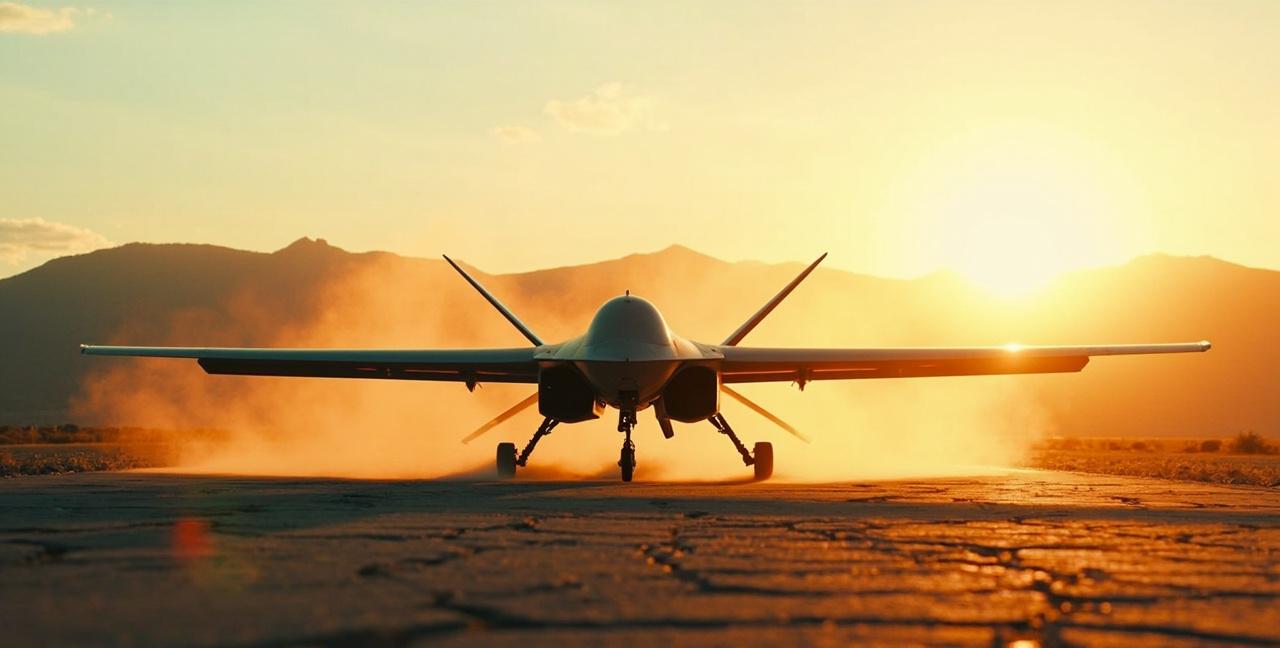
- Unmanned Aircraft Systems (UAS): Including Valkyrie, Firejet, and other tactical drones that are designed to be cheap and "attritable", meaning the U.S. military can afford to fly them in contested airspace without fearing losses.
- Hypersonic and Missile Systems: Programs such as Erinyes and Darkwing — among the DoD's most strategic next-generation weapons efforts.
- Target Drones and Space Systems: Supporting military training and Space Domain Awareness.
- Microwave electronics, turbojet engines, and other critical defense components.
Over 90% of its customers are the U.S. Department of Defense, the U.S. Space Force, NASA, and NATO allies. In effect, KTOS is a high-beta proxy on U.S. defense spending.
2. What's Been Happening Recently?
The news flow around KTOS over the past month has been unusually intense:
- Mid-July 2026: The company announced roughly $400 million in funding from the Department of War (DoW), primarily supporting hypersonic and national-security programs such as Erinyes and Darkwing — a meaningful order relative to its size.
- It also won a separate ~$100 million Space Domain Awareness contract.
- Late July: Kratos announced expansions of its California and Oklahoma City facilities specifically to scale up production of Valkyrie and Firejet drones.
- August 7, 2026: The company released its Q2 2026 earnings. The stock jumped about 5.85% on the day, with volume of roughly 4.79 million shares.
Notably, CNBC's Jim Cramer also publicly said on X that "defense stocks have been cut in half, and I actually want to buy Kratos", adding another tailwind to the narrative.
3. Earnings and Valuation: Is It Expensive?
Looking at the latest quarter's numbers, KTOS's growth is impressive, but profitability hasn't caught up yet:
- TTM revenue: ~$1.52 billion, growing about 30.5% YoY — relatively strong for a defense company.
- EPS: Just $0.17, pushing the trailing P/E ratio to a steep 357x.
- Gross profit: ~$350 million, with a gross margin around 23% — normal-ish for defense hardware, but on the lower end.
- Operating margin: About -0.17%, basically still in a "growth-at-any-cost" phase.
- Analyst median target price: ~$107.14, suggesting the market broadly sees more upside.
The takeaway is clear: KTOS is not priced on current earnings — it's priced on its story, contract pipeline, and defense thesis.
4. Where Does the Stock Sit Technically?
Technically, KTOS is in a "deep-recovery rebound" setup:
- 52-week high: $134
- 52-week low: $43.09
- 50-day moving average: $52.67
- 200-day moving average: $74.3
- Latest close: $60.77
In other words, the stock has reclaimed the 50-day MA but is still well below the 200-day MA, meaning the long-term trend has not fully turned bullish yet. Its beta is around 1.106 — punchier than the S&P 500 but not as wild as small-cap theme stocks.

5. Why Does the Stock Swing So Violently?
KTOS is a classic "theme stock + policy stock" hybrid. Its price is prone to three big swing factors:
- U.S. defense budget and policy tone: Different administrations have prioritized hypersonics, drones, and space differently. Any shift in budget allocation can move the stock sharply.
- Contract wins and losses: With revenue heavily concentrated on the DoD, a single hundred-million-dollar contract swing can re-rate the entire company.
- Narrative-driven flows: KTOS is treated as a core beneficiary of the "drone revolution," "hypersonic race," and "space race." These narratives tend to get over-bought in bulls and over-sold in bears.
6. Key Risks Every Investor Should Watch
Anyone considering KTOS needs to keep these risks front and center:
- Stretched valuation: A trailing P/E of 357x and forward P/E of 93x mean any disappointment on revenue or margins can trigger sharp drawdowns.
- Weak profitability: Operating margin is essentially zero; cash-flow improvement may not keep pace with capex.
- Customer concentration: Over 90% of revenue depends on the U.S. government, exposing it to shutdowns, budget freezes, or political shifts.
- Execution and supply-chain risk: Expanding factories for Valkyrie and Firejet is positive, but on-time delivery and cost control are real questions.
- Volatility: The 52-week price range spans more than 3x — this is a stock for narrative bets, not stable dividend income.
7. Plain-Language Summary: Who Should Buy KTOS?
In one line: KTOS is not for income investors — it's for those who believe "U.S. defense modernization, drones, and hypersonics will enter a mass-production boom" and want to place a controlled, theme-driven bet on that thesis.
If you treat it as a high-beta alternative to Lockheed Martin, then watching price action around the 50-day moving average is a reasonable approach. If you're just trying to ride short-term momentum, pay close attention to volatility and headline risk.
Either way, remember: however strong the narrative, KTOS is fundamentally a bet on the trajectory of U.S. defense spending and policy — and that risk always comes first.
⚠️ Disclaimer: This article is for educational purposes only and does not constitute investment advice. Investing involves risk.
🎯 Quick Quiz
Finished reading? Test what you remember
Question 1/5
Which of the following best describes KTOS's business profile according to the article?
✗ Incorrect
Your answer:—
Correct answer:B. A defense contractor focused on unmanned systems, hypersonics, and space for the U.S. DoD
💡 The article describes Kratos as a defense contractor building unmanned aircraft, hypersonic/missile systems, target drones, and space components for the U.S. Department of Defense.