
: Dual Pillars of Pharma & Medical Devices + 62 Years of Dividend Hikes – The Cornerstone of Healthcare Defensives
Johnson & Johnson (JNJ) Q1 2026 revenue reached $24.062 billion (+9.9%), with full-year guidance of $100.8 billion (+7%). Its innovative medicines portfolio spans four major therapeutic areas: immunology, oncology, neuroscience, and cardiovascular. The medical devices segment is led by electrophysiology and the Ottava surgical robotics platform. JNJ has raised its dividend for 62 consecutive years, with a current yield of approximately 2.8%. Key risks include Stelara's patent expiration, over 50,000 pending talc-related lawsuits, and the Inflation Reduction Act's drug pricing negotiations.
Chip of Blue Chips in Global Healthcare
Johnson & Johnson (NYSE: JNJ) is one of the world's largest integrated healthcare companies. After spinning off its consumer health business Kenvue in 2023, JNJ has fully focused on two high-value-added segments: Innovative Pharmaceuticals + Medical Devices.
Q1 2026 Key Data:
- Revenue $24.062 billion (+9.9%, operational +6.4%)
- Full-year revenue guidance $100.8 billion (+7%)
- Adjusted EPS $11.55 (+7.1%)
- 2025 full-year FCF $24.53 billion
- 62 consecutive years of annual dividend increases 🏆
- Dividend yield ~2.8%
JNJ's positioning: Pharma + Devices dual-engine = pharmaceutical growth + medical device stability. The two segments have offsetting cycles = hedge against single-segment risk. 62 years of dividend increases = the anchor of healthcare defensives.
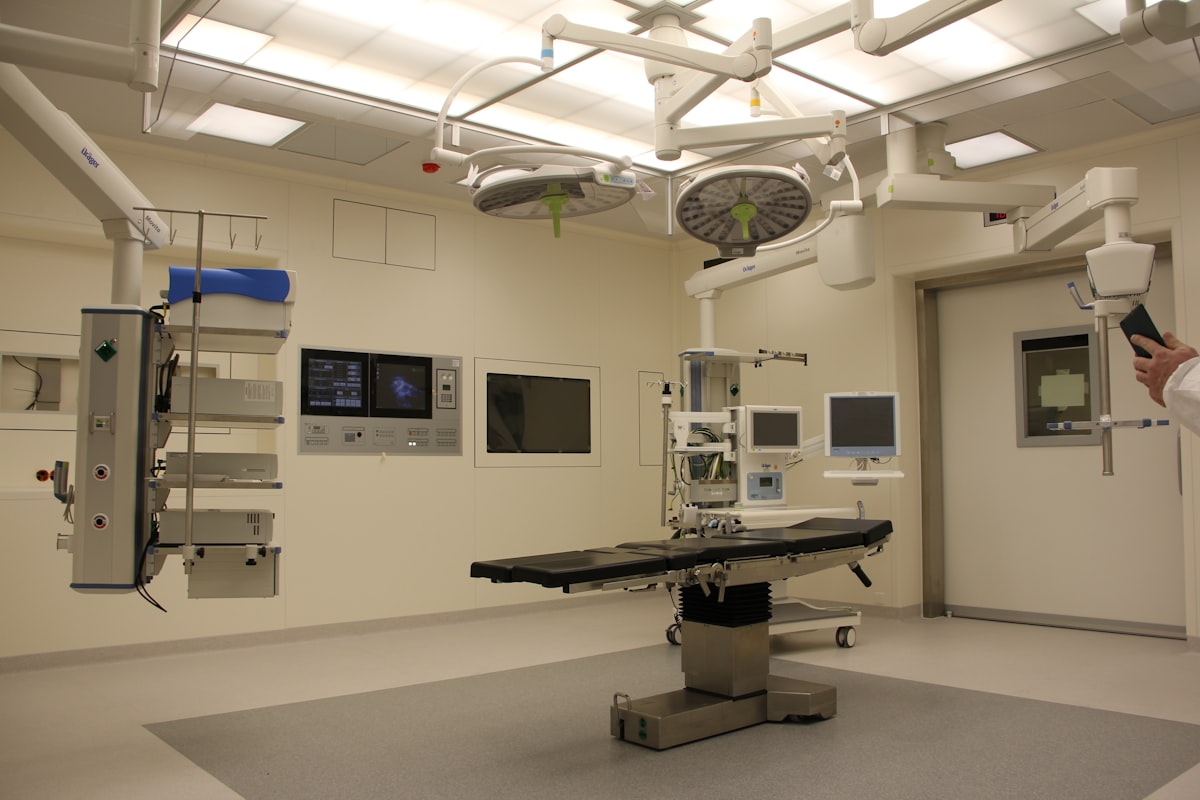
*Medical devices — electrophysiology, surgical robotics, intraocular lenses. Recurring consumable purchases + high-priced equipment sales = long-term hospital contracts lock in revenue. Not affected by drug patent expirations = cycle hedge.*
I. Dual-Engine Pharma + Devices Business Model
① Innovative Medicine (~65% of revenue) — Core Profit Driver
| Track | Representative Drugs | Features |
|---|---|---|
| Immunology | Stelara, Tremfya, Icotyde | Stelara exceeds $10B in annual sales, patent expiring |
| Hematology / Oncology | Darzalex, Tecvayli | Standard of care for multiple myeloma |
| Oncology | Rybrevant | Continued ramp-up |
| Psychiatry | CAPLYTA | New drug for depression 🔥 |
| Cardiovascular | — | Stable supplement |
Core Logic — Pipeline Relay:
Stelara (annual sales $10B+) → 2026 biosimilars enter market → sales decline
→ But: Tremfya new indications (IBD) relay
→ Icotyde oral psoriasis new drug relay
→ Darzalex bispecific therapy continues to grow
→ CAPLYTA depression new drug ramping 🔥
→ Halda acquisition enriches oncology pipeline

→ Before patent expiration, upgrade same-target + new indications smooth out the cliff
→ Global hospital + distribution channels fully built out
→ Continued expansion in emerging markets
Stelara's patent expiration is the biggest near-term pressure. But JNJ's pipeline relay is fully prepared — Tremfya + Icotyde + CAPLYTA + Darzalex multi-line relay = smooth passage through the patent cliff.
② MedTech (~35% of revenue) — Cycle Hedge Segment
| Track | Product | Features |
|---|---|---|
| Electrophysiology | VARIPULSE pulsed ablation | High-double-digit growth 🔥 |
| Surgical Robotics | Ottava (commercialization upcoming) | Targeting Da Vinci 💰 |
| Intraocular Lenses | Vision optics series | Stable foundation |
| Orthopedic Consumables | — | Planned spin-off in 2027 |
Core Highlights of the Device Segment:
Electrophysiology + cardiac intervention → high-double-digit growth → VARIPULSE ramp in EU/US 🔥
Ottava surgical robot → 2026 filing → 2027 commercialization
→ Targeting Intuitive Surgical Da Vinci → hundred-billion-dollar opportunity
→ If Ottava succeeds = second growth curve 💰

2027 orthopedic spin-off → remaining high-growth devices get purer valuation
→ Device segment growth rate further accelerates
Profit Model:
- Recurring consumable purchases = stable recurring revenue
- One-time high-priced equipment sales = flexible incremental revenue
- Long-term hospital procurement contracts = locked-in revenue
- Not affected by drug patent expirations = perfect hedge
Overall Profit Logic
Pharma (65%) → high-margin prescription drugs → stable FCF
→ Reinvest: device R&D + clinical pipeline M&A + dividends

Devices (35%) → consumables + equipment → cycle hedge
→ Not affected by patent expiration → smooths pharma cycle

Pharma + Devices → offsetting cycles → complementary
→ Rigid healthcare demand → strong resilience in downturns
→ 62 years of dividend increases → defensive core
→ Spin off low-growth businesses → growth center moves up
II. Latest Fundamental Data

Q1 2026 Financial Summary
| Metric | Q1 2026 | YoY |
|---|---|---|
| Revenue | $24.062 billion | +9.9% (operational +6.4%) |
| Full-year revenue guidance | $100.8 billion | +7% |
| Adjusted EPS | $11.55 | +7.1% |
| 2025 FCF | $24.53 billion | Stable |
Balance Sheet + Shareholder Returns
| Metric | Value |
|---|---|
| Total Assets | $200.894 billion |
| Total Liabilities | $119.708 billion |
| Consecutive Dividend Increases | 62 years 🏆 |
| Dividend Yield | ~2.8% |
| Liability Structure | Manageable ✅ |
Recent Risk Events
| Event | Impact |
|---|---|
| Stelara Biosimilars | Enter market in 2026, expected annual sales decline ~$1B ⚠️ |
| Talc Litigation | 50,000+ cases unresolved ⚠️ |
| Ottava Approval | 2026 filing, 2027 commercialization |
| Device Tariffs | Full-year impact ~$500M on profit ⚠️ |
| Orthopedic Spin-off | 2027 execution |
Valuation Metrics (June 2026)
| Metric | JNJ | Interpretation |
|---|---|---|
| Forward P/E | ~14-15x | Lower-middle of pharma industry ✅ |
| Dividend Yield | ~2.8% | Stable |
| FCF Yield | ~3-4% | Reasonable |
III. Bull vs. Bear Investment Logic Comparison
🟢 Bullish Catalysts
1. Pharma-Device Dual Engine — Offsetting Cycles = Natural Hedge
Pharma has patent cycles → devices unaffected. Devices are hit by tariffs/FX → pharma is globally diversified. The two segments have offsetting cycles = overall profit volatility far lower than pure pharma or pure device companies.
2. Fully Prepared Pipeline — Smooth Passage Through Stelara Cliff
Tremfya new IBD indication + Icotyde oral new drug + CAPLYTA depression ramp + Darzalex bispecific = multi-line relay. JNJ's pipeline depth = among the most complete in global Big Pharma.
3. Ottava Surgical Robot — Second Growth Curve
If Ottava successfully commercializes in 2027 → opens the hundred-billion-dollar surgical robotics market → comparable to Intuitive Surgical (ISRG) = major revaluation.
4. High Growth in Electrophysiology — VARIPULSE Ramp
Cardiac pulsed ablation = high-growth track. VARIPULSE ramp in EU/US = device segment growth above industry average.
5. 62 Years of Dividend Increases — The Ultimate Defensive
62 consecutive years of annual dividend increases = "King of Dividends". First choice for bearish-flight capital. 2.8% dividend yield + $24.5B FCF = extremely reliable.
6. Rigid Healthcare Demand — Recession-Resistant
In downturns → hospital procurement and prescription demand are hard to cut significantly. Healthcare = the last expense to be cut.
7. 2027 Orthopedic Spin-off — Valuation Release
Spin off low-growth orthopedics → remaining high-growth devices get purer valuation → market revaluation.
8. Limited IRA Impact
Multiple new drugs not on the first negotiation list → near-term IRA drug price negotiation impact controllable.
🔴 Core Risks
1. Stelara Patent Expiration — $1B-Level Hit
2026 biosimilars enter market → expected annual sales decline ~$1B. Although pipeline relays, near-term compression of pharma segment growth.
2. Talc Litigation — 50,000+ Cases Unresolved
Cumulative over 50,000 unresolved cases. Hundred-million-dollar single-case verdicts appear from time to time → potential巨额 one-time loss impact on net income. This is JNJ's unique tail risk.
3. IRA Mandatory Drug Price Negotiation — Long-Term Pricing Power Erosion
Subsequent mature drugs may be included in negotiations → long-term erosion of drug pricing power.
4. Ottava Approval + Commercialization Uncertainty
Surgical robotics is a highly competitive track (Da Vinci dominant). Ottava approval + commercialization progress falling short = hard to drive device increment in the near term.
5. Tariffs + FX Compress Overseas Profit
Medical device tariffs full-year impact ~$500M on profit. FX fluctuations further compress overseas revenue.
6. Intensifying Competition
Same-mechanism new drugs in autoimmune and oncology areas divert patients. AbbVie (Humira/Rinvoq), BMS, Merck and others compete across the board.
7. High Debt + High Interest Rates
Total liabilities $119.7B → high-rate environment interest expenses continuously erode net income.
8. Clinical Trial Failure Risk
New drug/new device clinical data falling short = direct impact on stock price.
IV. Comprehensive Investment Judgment
Short-Term Defensive Hedge Trades (1-3 Months): ✅ Suitable for Hedging
| Factor | Assessment |
|---|---|
| Hedge Attribute | Extremely strong — 62-year dividend king |
| Volatility | Low (Beta < 0.6) |
| Catalysts | Pipeline data, Ottava progress, litigation settlement |
| Features | Bear market safe haven + income |
Long-Term Pharma-Device Dual-Engine Income Allocation (3-5 Years): ✅ Bullish (Steady Type)
| Scenario | Probability | Core Assumption | Target Direction |
|---|---|---|---|
| Super Bull | 15% | Ottava succeeds + CAPLYTA explodes + litigation settles | +25-45% |
| Growth | 40% | Pipeline relay + devices +10% + dividend 2.8% | +10-25% |
| Base | 35% | Stelara pressure + litigation persists + stable growth | +3-12% |
| Bear | 10% | Litigation巨额 verdict + Ottava fails + IRA expands | -15-25% |
Long-Term Investment Approach:
- Healthcare defensive core holding: JNJ = the most stable blue chip in the healthcare sector. 62 years of dividends + $24.5B FCF = extremely strong downside protection
- Top choice for income investors: 2.8% dividend yield + 62 consecutive years of dividend increases = reliable compounding source
- Surgical robotics theme: If you believe Ottava = the next ISRG → JNJ has significant revaluation upside
- Not suitable for: investors seeking high growth (+7% growth too slow), investors with zero tolerance for litigation risk, speculators seeking tech-stock elasticity
Key Metrics to Monitor
| Metric | Watch Point | Why It Matters |
|---|---|---|
| Stelara Sales Changes | Every quarter (biosimilar impact) | $1B-level pressure |
| Tremfya + CAPLYTA Ramp | Every quarter | Pipeline relay validation 🔥 |
| Ottava Approval Progress | FDA announcements | Second growth curve 🔥 |
| VARIPULSE Ramp | Electrophysiology revenue growth | Device growth engine |
| Talc Litigation | Quarterly case progress | Tail risk |
| Operating Margin | Every quarter | Stelara pressure validation |
| Dividend Growth | Annually (year 63?) | Dividend king |
| FCF Execution | Every quarter | Shareholder return capacity |
| Orthopedic Spin-off Progress | 2027 roadmap | Valuation release |
Conclusion: The Anchor of Healthcare Defensives
JNJ's investment logic can be distilled into:
Pharma + Devices dual engine = pharmaceutical growth + device stability. 62 years of dividend increases = certainty through cycles. This is JNJ's value.
- Innovative drugs → immunology/oncology/neuroscience four major tracks + fully prepared pipeline relay
- Devices → high-growth electrophysiology + Ottava's hundred-billion-dollar opportunity
- 62-year dividend king → $24.5B FCF → extremely strong downside protection
The Biggest Controversy:
"Stelara patent expiration + talc litigation = JNJ's two dark clouds."
"Bulls: pipeline relay fully prepared = smooth passage through Stelara cliff. Litigation will eventually settle. JNJ's core competitiveness unchanged."
"Bears: $1B Stelara impact + 50,000 cases of litigation + IRA drug price negotiation = triple pressure. Won't die, but growth may remain sluggish."
"JNJ's story is similar to Coca-Cola — it won't excite you, but it will give you peace of mind. 62 years of dividend increases have weathered the Vietnam War, oil crises, financial crisis, and COVID. That record itself is the strongest endorsement."
"Ottava is JNJ's hidden option. If surgical robotics succeeds → device segment revaluation = pleasant surprise. If not → the base remains stable. Limited downside + upside optionality = good risk-reward."
Final advice: JNJ is not a growth stock — it's a defensive stock. 14-15x P/E + 2.8% dividend + 62 consecutive years of dividend increases = buying certainty. Allocate 5-10% in your portfolio = the best healthcare defensive configuration. Buy it and go to sleep, that's JNJ.
⚠️ Disclaimer: This article is for educational purposes only and does not constitute investment advice. Investing involves risk.
🎯 Quick Quiz
Finished reading? Test what you remember
Question 1/5
What is the strategic rationale behind JNJ's dual-engine structure (Innovative Medicine ~65% + MedTech ~35%)?
✗ Incorrect
Your answer:—
Correct answer:A. The two segments have offsetting cycles, providing a natural hedge against single-segment risk
💡 The article explicitly states that Pharma has patent cycles while devices are unaffected, and devices are hit by tariffs/FX while pharma is globally diversified — the offsetting cycles make overall profit volatility far lower than pure-play peers.