BE (Bloom Energy) Investment Analysis: The Fuel Cell Newcomer Riding the AI Power Crunch
Bloom Energy posted Q1 2026 revenue of $751M (+130% YoY), backed by a 1.2GW Oracle deal and a $2.6B long-term agreement with Nebius. SOFC fuel cells are emerging as the go-to off-grid power solution for AI data centers. However, accumulated losses, stretched valuation, customer concentration, and hydrogen impairment charges have fueled sharp bull-bear disagreement.
Bloom Energy: A Timely Rain for the AI Power Drought
The explosion of AI compute has brought a neglected bottleneck to the forefront — power. Each AI server consumes 5–10x more electricity than a traditional server, while U.S. grid upgrades take 3–5 years. Data centers cannot wait.
Bloom Energy (NYSE: BE) offers a unique solution: Solid Oxide Fuel Cell (SOFC) on-site power generation — no waiting for the grid, power plants can be built right next to data centers within a few dozen days, generating electricity directly from natural gas.
Q1 2026 Data:
- Revenue $751 million (+130% YoY)
- Product revenue +208%
- Oracle contract 1.2 GW
- Nebius contract $2.6 billion
I. Equipment + Operations & Maintenance Dual-Engine Business Model
Two Major Revenue Segments
| Segment | Description | Profit Characteristics |
|---|---|---|
| Equipment Sales | SOFC fuel cell system hardware | Short-term volume drives revenue, gross margin improving |
| Aftermarket O&M Services | 10–15 year long-term service contracts | High-margin, stable cash flow |

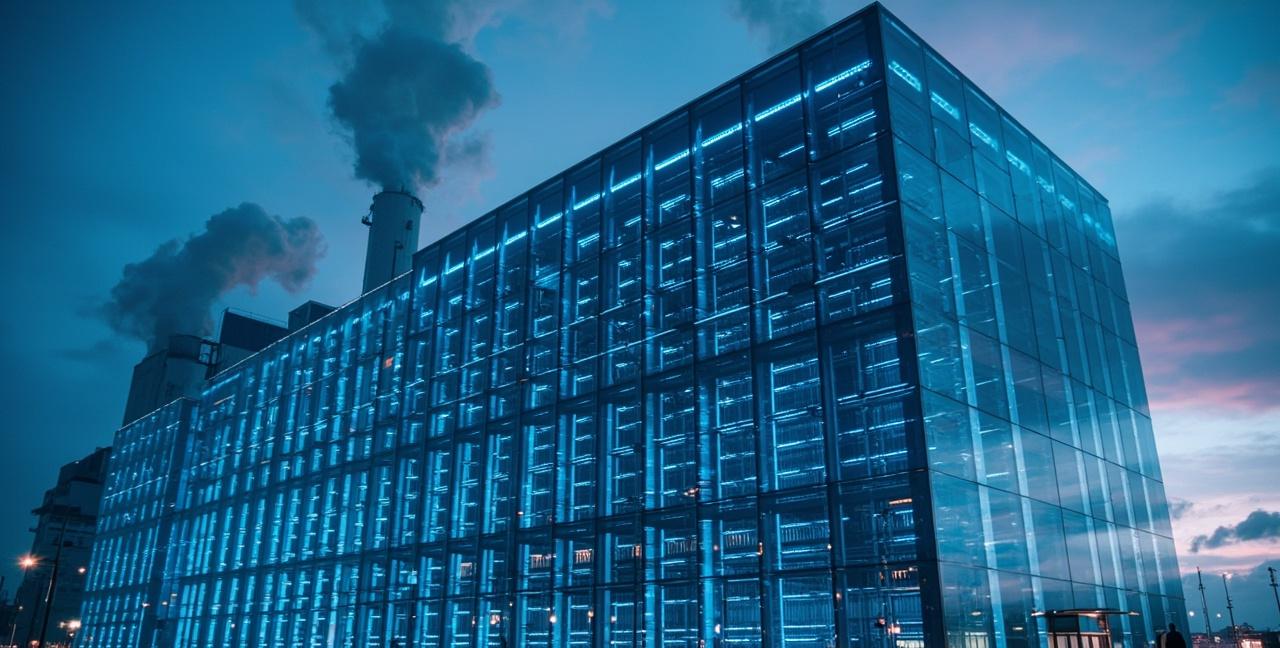
*Bloom Energy's SOFC system — generating power on-site next to AI data centers, with no need to wait for grid upgrades.*
Three Major Application Scenarios
| Scenario | Estimated Share | Customers | Characteristics |
|---|---|---|---|
| AI Data Centers | ~60%+ 🔥 | Oracle, Nebius, cloud providers | Fastest growth |
| Commercial & Industrial Parks | ~20% | Factories, commercial real estate | Stable foundation |
| Utility Grid | ~15% | Power companies | Long-cycle projects |
Core Competitive Advantages
1. Deployment Speed — 10x Faster Than the Grid
| Solution | Deployment Time |
|---|---|
| Traditional grid upgrade | 3–5 years |
| Large gas turbines | 12–18 months |
| Bloom SOFC | 30–90 days ✅ |
AI data centers cannot wait 3–5 years. Bloom's core value proposition: "Your GPUs are installed, I'll handle the power within a few dozen days."
2. Dual-Fuel Compatibility
- Natural gas: The current mainstream fuel — abundant supply in the U.S. + low price
- Hydrogen: Long-term green hydrogen transition path — SOFC supports it natively
- Future progression from natural gas → blended hydrogen → pure hydrogen
3. High Power Generation Efficiency
- Bloom SOFC efficiency ~60–65%
- Traditional gas turbines ~40–50%
- Diesel generators ~30–35%
- Plus much lower emissions (NOx, SOx nearly zero)
4. U.S. Clean Energy Tax Credits
- ITC (Investment Tax Credit): 30% clean energy investment credit
- Bloom received up to $75 million in federal tax credits from the DOE
- This directly lowers customer deployment costs → driving order growth
Profit Logic
Short term: Equipment ramp-up → revenue surge → economies of scale lower unit costs → gross margin improvement
Long term: Installed base accumulates → O&M contracts grow continuously → high-margin recurring revenue → stable cash flow
Bloom's long-term logic mirrors the "Solar + O&M" model: after selling the equipment, ongoing revenue through 10–15 years of operations and maintenance services. As the cumulative installed base grows, the share of O&M revenue will climb higher → revenue becomes increasingly stable.
II. Latest Fundamentals
Q1 2026 Financial Highlights
| Metric | Q1 2026 | YoY |
|---|---|---|
| Total Revenue | $751 million | +130% 🔥 |
| Product Revenue | Significant growth | +208% 🔥🔥 |
| Gross Margin | Improving (approaching breakeven) | Positive trend |
| Operating Cash Flow | First off-season positive ✅ | Milestone |
| EPS Guidance (Full Year) | $1.85 - $2.25 | First annual profit forecast |
Major Customer Contracts

| Customer | Contract Size | Use Case | Status |
|---|---|---|---|
| Oracle | 1.2 GW | AI data center | Deploying 🚀 |
| Nebius | $2.6 billion / ~328 MW | AI data center | Three-phase, 10-year |
| Other cloud providers | Multi-billion dollar level | AI + enterprise | In negotiation |
| Utilities | GW scale | Grid support | Continuous sign-ups |
Order Backlog + Capacity
| Metric | Value |
|---|---|
| Cumulative Orders | Multi-billion dollars (including O&M) |
| 2026 Revenue Guidance | ~80% growth |
| Annual Capacity | Continuously expanding |
| New Mexico Project | Up to 2.45 GW AI data center |
Valuation Metrics (June 2026)
| Metric | BE | Interpretation |
|---|---|---|
| Price/Sales (P/S) | Elevated (high-growth premium) | Reflects AI power hype |
| Analyst Price Targets | $203–260 | Wide divergence |
| Historical Cumulative Losses | Multi-billion dollars | Long-term cash burn |
| Insiders | Notable selling records | Worth monitoring |
⚠️ Risk Data
- Hydrogen business: Slow commercialization of electrolyzer-produced hydrogen → asset impairment risk
- Long-term cumulative losses: Although Q1 operating cash flow turned positive, cumulative losses remain massive
- Customer concentration: Top three customers account for the majority of revenue → dependency risk
III. Bull vs. Bear Investment Logic
🟢 Bull Catalysts
1. Global AI Compute Hits a Grid Bottleneck — Off-Grid Power is a Necessity
AI data center power demand growth is far outpacing grid construction speed. U.S. data centers will need ~35,000 MW of new power by 2030 — the grid can only supply part of that. Off-grid, on-site power generation = rigid demand.
2. Oracle 1.2 GW + Nebius $2.6 Billion = Revenue Visibility
Together, these two contracts have already locked in most of Bloom's capacity for the next several years. Both customers are AI compute giants → lower order execution risk.
3. U.S. 30% ITC Clean Energy Subsidy
The 30% investment tax credit directly reduces customer costs → making Bloom's SOFC more cost-competitive. This subsidy will remain at least through 2030+.
4. O&M Revenue Accumulates with Installed Base
Every 1 MW of SOFC installed = 10–15 years of O&M revenue. As the cumulative installed base grows from hundreds of MW toward GW scale, O&M revenue will form an ever-larger stable cash flow foundation.
5. 2026 Guidance of +80% Revenue Growth + First Profit
Management guides ~80% revenue growth in 2026 with EPS of $1.85–2.25 — meaning Bloom is about to transition from a "cash-burning company" to a "profitable company."
6. High SOFC Technology Barriers
The material science + manufacturing process of solid oxide fuel cells is extraordinarily complex. Bloom has 20+ years of technology accumulation in this space, with very few direct competitors.
7. Natural Gas → Hydrogen Long-Term Green Hydrogen Transition
SOFC natively supports hydrogen fuel. Long-term, Bloom's systems can transition from natural gas to green hydrogen — delivering a zero-carbon power solution.
🔴 Core Risks
1. Extremely Elevated Valuation
The stock has skyrocketed over the past year → P/S is at historical highs. Even with 2026 profits, the P/E may still be very high. The market has already priced in the best-case AI power scenario.
2. Multi-Year Cumulative Massive Losses
Since its founding in 2001, Bloom has accumulated multi-billion dollar losses. Q1 positive operating cash flow is a good signal, but the profit base remains thin.
3. Highly Concentrated Customers
The top three customers (Oracle, Nebius + others) account for the majority of revenue. If any major customer delays or cancels → revenue could fall off a cliff.
4. AI Data Center Project Delay Risk
AI project construction timelines may be delayed for various reasons (funding, permits, GPU supply) → Bloom's order recognition cadence will be uneven.
5. Subsidy Policy Adjustment Risk
If the U.S. government cuts clean energy ITC → customer deployment costs rise → orders could decline.
6. Natural Gas Connection Restrictions
Some cities / states are tightening new natural gas pipeline access → squeezing SOFC's addressable market.
7. Electrolyzer Hydrogen Commercialization Below Expectations
Bloom's hydrogen business is progressing slower than expected and may face asset impairment. Hydrogen is unlikely to contribute meaningful revenue in the short term.
8. Insider Selling Shakes Confidence
Insiders selling at high levels → the market may interpret this as "insiders are not optimistic." Selling patterns need to be closely watched.
IV. Comprehensive Investment Verdict
Short-Term Speculation (1–3 Months): ⚠️ High Risk, High Volatility
| Factor | Assessment |
|---|---|
| Catalysts | Major customer new contract announcements, capacity expansion news, Q2 earnings |
| Volatility | Extreme (AI concept + small cap + loss-making company) |
| Risk | Major customer delays / insider selling / market sentiment shift |
| Suitable For | Momentum traders may participate, but stop-losses must be tight |
Long-Term Value Allocation (3–5 Years): ⚠️ Constructive, But Requires Patience and Conviction
| Scenario | Probability | Core Assumption | Return |
|---|---|---|---|
| Bull | 25% | AI power demand continues to explode + capacity ramp + O&M accumulation + stable 2030 profits | +100–200% |
| Growth | 35% | Major customer contracts execute + new orders + gradual profitability | +30–60% |
| Base | 25% | Growth slows + competition intensifies + subsidies cut | -10–20% |
| Bear | 15% | Major customer cancels + losses widen + financing difficulty | -50–70% |
Long-Term Investment Approach:
- AI infrastructure thematic investors: BE is a unique "AI power" name — unlike AVGO chips or FSLU data center REITs, it sells "power generation capacity." If you believe the AI power shortage will persist 3–5 years, Bloom's SOFC is the fastest solution
- Clean energy investors: ITC subsidies + natural gas → hydrogen transition path = long-term clean energy story
- Not suitable for: Investors who cannot tolerate extreme volatility, income seekers chasing stable dividends, or those with principled concerns about loss-making companies
Key Indicators to Monitor
| Indicator | Monitoring Point | Why It Matters |
|---|---|---|
| Major customer order execution | Oracle/Nebius deployment progress | Core revenue driver |
| New contract signings | New order value each quarter | Growth sustainability |
| Gross margin | Quarterly improvement pace | Profit path validation |
| O&M revenue share | Quarterly increase | Stable cash flow foundation |
| Operating cash flow | Each quarter | Cash burn rate |
| Insider selling | SEC Form 4 filings | Insider confidence |
| ITC subsidy policy | Legislative dynamics | Subsidy continuity |
| Natural gas prices | Monthly | SOFC operating costs |
| Hydrogen business | Impairment risk | Asset quality |
Conclusion: The Biggest Bet on the AI Power Drought
Bloom Energy's investment thesis can be condensed into one core conviction:
The next bottleneck for AI is not GPUs, but power.
Nvidia can keep releasing faster GPUs, but if there is not enough power to drive them, AI compute will hit a ceiling. Bloom Energy's SOFC on-site power solution is currently the fastest "power supply line."
- Oracle 1.2 GW contract = a tech giant has voted with real money
- Nebius $2.6 billion contract = an AI compute operator has validated the technology
- Q1 +130% growth = orders are converting into revenue
- First off-season positive cash flow = the business model is becoming self-sustaining
But the risks are equally large: multi-billion cumulative losses, highly concentrated customers, elevated valuation, hydrogen business impairment. Bloom is not a "safe clean energy company" — it is a high-leverage bet that the "AI power shortage will continue to worsen."
If you believe AI needs power, power needs speed, and speed needs SOFC — then Bloom is your stock. But please keep position size small (1–3%), because if a major customer delays or subsidies are cut, the drawdown can be deep.
"In the AI gold rush, some sell picks (Broadcom), some sell water (data centers), and Bloom Energy sells — electricity." Without power, you cannot swing a pick, and you cannot pump water. This is Bloom's unique value proposition.
⚠️ Disclaimer: This article is for educational purposes only and does not constitute investment advice. Investing involves risk.
🎯 Quick Quiz
Finished reading? Test what you remember
Question 1/5
How quickly can Bloom Energy's SOFC systems be deployed compared to a traditional U.S. grid upgrade?
✗ Incorrect
Your answer:—
Correct answer:A. 30–90 days versus 3–5 years
💡 The article states Bloom SOFC systems can be deployed in 30–90 days, versus traditional grid upgrades that take 3–5 years. This speed advantage is positioned as the core value proposition for AI data centers that cannot wait.