What Impact Does Triple Witching Day Have on US Stocks? What Investors Need to Watch Out For
Triple Witching is one of the biggest volatility catalysts in the U.S. stock market each quarter. This article breaks down the mechanics of Triple Witching, its real impact on stock prices, how market maker gamma hedging amplifies volatility, and how retail investors should respond.
What Is Triple Witching?
Triple Witching, formally known as "the triple expiration day," refers to the day when three types of derivatives on the U.S. stock market expire simultaneously:
- Stock Options
- Index Options
- Index Futures
All three expire on the same day, an event that occurs four times a year, on the third Friday of March, June, September, and December.
The name "Triple Witching" sounds mysterious, but it's simply shorthand for "three things expiring at once." Yet its impact on the market is anything but simple—trading volume and volatility on this day are often 2–3 times the normal level.
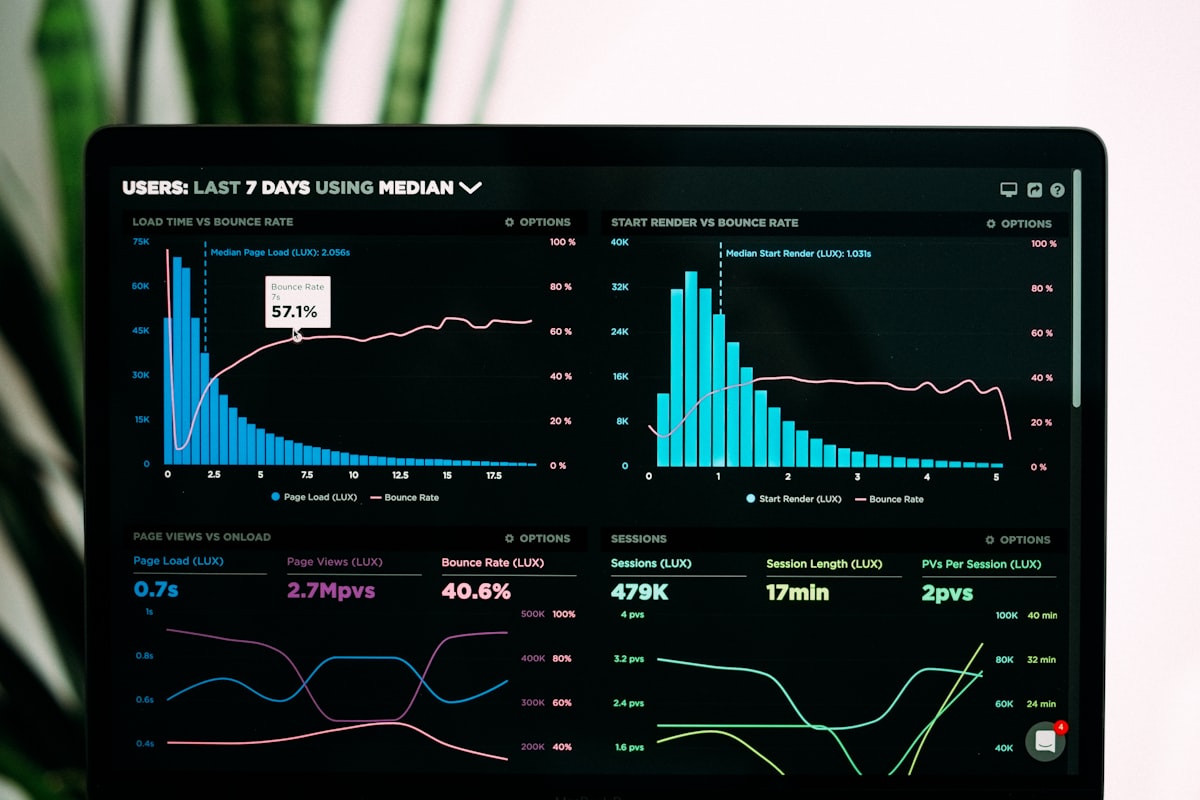
*Triple Witching trading data—volume, open interest, and Gamma exposure—all reach their peak on this day.*
Why Does Triple Witching Amplify Volatility?
Reason 1: Forced Position Closing
Options and futures expiring on Triple Witching will be automatically settled unless holders close or roll their positions before expiration. This means:
- A massive number of calls and puts are closed at the same time
- The resulting buy and sell orders directly冲击 underlying stock prices
- Especially during the final hour before close (the so-called "Magic Hour"), settlement pressure reaches its peak
Reason 2: Market Maker Gamma Hedging
This is the deepest underlying cause of Triple Witching volatility, and a mechanism most people overlook:
- Market Makers, after selling calls/puts, need to hedge their risk by trading the underlying stock
- When price sits in a certain zone, market makers' hedging behavior amplifies price movement:
- Positive Gamma zone: market makers "chase the market up to buy"—buy on dips, sell on rallies → suppresses volatility
- Negative Gamma zone: market makers "chase the market down to sell"—sell on dips, buy on rallies → amplifies volatility
- The massive expiration on Triple Witching causes Gamma exposure to shift dramatically, forcing market makers to make large adjustments to their hedge positions
Simply put: if market makers are in a negative Gamma state, Triple Witching can turn into a "stampede event"—everyone rushing in the same direction.
Reason 3: Index Rebalancing
Some index funds conduct quarterly rebalancing on Triple Witching, adjusting component stock weights. This large-scale mechanical buying and selling further boosts trading volume and price impact.
Market Characteristics of Triple Witching
Volume Surge
| Metric | Normal Day | Triple Witching |
|---|---|---|
| Full-day volume | Normal | 1.5x – 3x |
| Final hour volume | 5–10% of day | 15–25% of day |
| VIX volatility index | Normal | May spike or plunge |
The "Pin" Effect—Stocks "Stuck" at a Price
A fascinating phenomenon occurs on Triple Witching: a stock's price seems to be magnetically drawn to a certain level—this is called Strike Pinning.
How it works:
- If a stock has heavy open interest at both the $100 Call and $100 Put
- When the stock price approaches $100, market makers' hedging behavior "pulls" the price toward that Strike
- Because in the positive Gamma zone market makers "sell on rallies and buy on dips," which naturally pulls the price back toward the Strike
Practical tip: Before Triple Witching, check which Strike has the largest Open Interest among the major blue chips. That price is likely to act as the day's "magnet."
End-of-Day Anomalies
The final 30–60 minutes of Triple Witching are the most chaotic period of the entire market:
- A flood of market orders pours in
- Index futures are settled at the closing price (or special opening price)
- Price action during this window may run completely opposite to the rest of the day
5 Things Retail Traders Should Pay Attention To
*Wall Street—the rules of Triple Witching are set by institutions; retail traders need to know how to protect themselves.*
1. Don't Chase Orders in the Final Hour
The final hour of Triple Witching is dominated by algorithms and major institutions, and retail market orders are极易 eaten by slippage. If you must trade on Triple Witching, try to complete your trades during the 10:00 AM – 2:00 PM window.
2. Manage Options Positions Early
If you hold options about to expire:
- In-the-money options → close or exercise early; don't wait until the last minute
- Out-of-the-money options → IV Crush on Triple Witching will accelerate their decay to zero
- If you want to roll → roll to the next expiration month at least 2–3 days ahead to avoid the liquidity trap on expiration day
3. Watch the Strike with the Largest Open Interest
Use the option chain to find the Strike with the largest Open Interest:
- If the stock price is near this Strike → expect a "Pin" effect; the stock may oscillate around this level
- If the stock price is far from this Strike → once it suddenly approaches, it may trigger a "Gamma Squeeze" or "Gamma Crush"
4. Use Wider Stop-Losses Than Usual
Triple Witching volatility is high, so normal stop-loss distances can be easily triggered. Two options:
- Widen the stop-loss (e.g., from the usual 1% to 2–3% on Triple Witching)
- Reduce position size (lower risk exposure while keeping the original stop-loss distance)
5. Watch the "Real Direction" After Triple Witching
Triple Witching price action is often driven by derivatives settlement, not fundamentals. The first trading day after Triple Witching (usually the following Monday) better reflects the market's true direction.
Rule of thumb: Triple Witching up → Monday may pull back; Triple Witching down → Monday may rebound. This is not absolute, but it happens with high frequency.
2026 Triple Witching Dates
| Date | Day | Highlights |
|---|---|---|
| March 20 | Friday | Q1 settlement + SPX/NDX rebalance |
| June 19 | Friday | Q2 settlement (Today!) + post-FOMO effects |
| September 18 | Friday | Q3 settlement + historically the most volatile Triple Witching |
| December 18 | Friday | Q4 settlement + year-end tax-loss harvesting |
Note: Triple Witching in June and December is usually the most volatile, because they coincide with semi-annual and annual option expirations.
Triple Witching vs. Quadruple Witching
You may have heard of "Quadruple Witching," which actually adds Single Stock Futures to the expiration list. Although single stock futures volume is small, theoretically four instruments expiring simultaneously would create even greater volatility. In most discussions, "triple" and "quadruple" are used interchangeably, because the impact of single stock futures is relatively minimal.
Chapter Summary
Triple Witching is the most exciting (and most dangerous) day of each quarter on the U.S. stock market. Keep the following points in mind:
- Volume surges but the direction may be distorted—settlement-driven ≠ fundamentals-driven
- The final hour is the institutions' battlefield—retail traders should avoid it
- Watch the Strike with the largest Open Interest—that's the day's "magnet"
- Manage options positions in advance—don't wait until the last minute
- The Monday after Triple Witching shows the true direction—be patient and let the market digest
⚠️ Disclaimer: This article is for educational purposes only and does not constitute investment advice. Investing involves risk.