Is Delta Air Lines (DAL) Worth Buying? 2026 Investment Analysis: Four Revenue Pillars + Bull/Bear Logic + Short and Long-Term Outlook

Is Delta Air Lines (DAL) Worth Buying? 2026 Investment Analysis: Four Revenue Pillars + Bull/Bear Logic + Short and Long-Term Outlook

Among the four major U.S. airlines, Delta Air Lines has the most structurally sound business model and the most stable cash flow. This article breaks down its four revenue pillars (passenger transportation, AmEx co-branded credit card, MRO maintenance, and cargo value-added services), interprets the underlying nature of its $15.8 billion Q1 2026 revenue and temporary loss, balances the bull and bear cases, and provides investment judgments for the short term and long term over a 3-5 year horizon.

LifeFinAI21/06/2026 ไธŠๅˆ03:3013 min

Is Delta Air Lines?

Delta Air Lines (NYSE: DAL) is one of the largest legacy carriers in the world, headquartered in Atlanta, Georgia, USA. Its core hub โ€” Hartsfield-Jackson Atlanta International Airport (ATL) โ€” has held the title of "world's busiest airport" for many consecutive years. Delta's fleet is among the largest globally, surpassing 1,000 aircraft in early 2026, operating more than 5,000 flights daily across 300+ destinations on six continents.

cover
cover

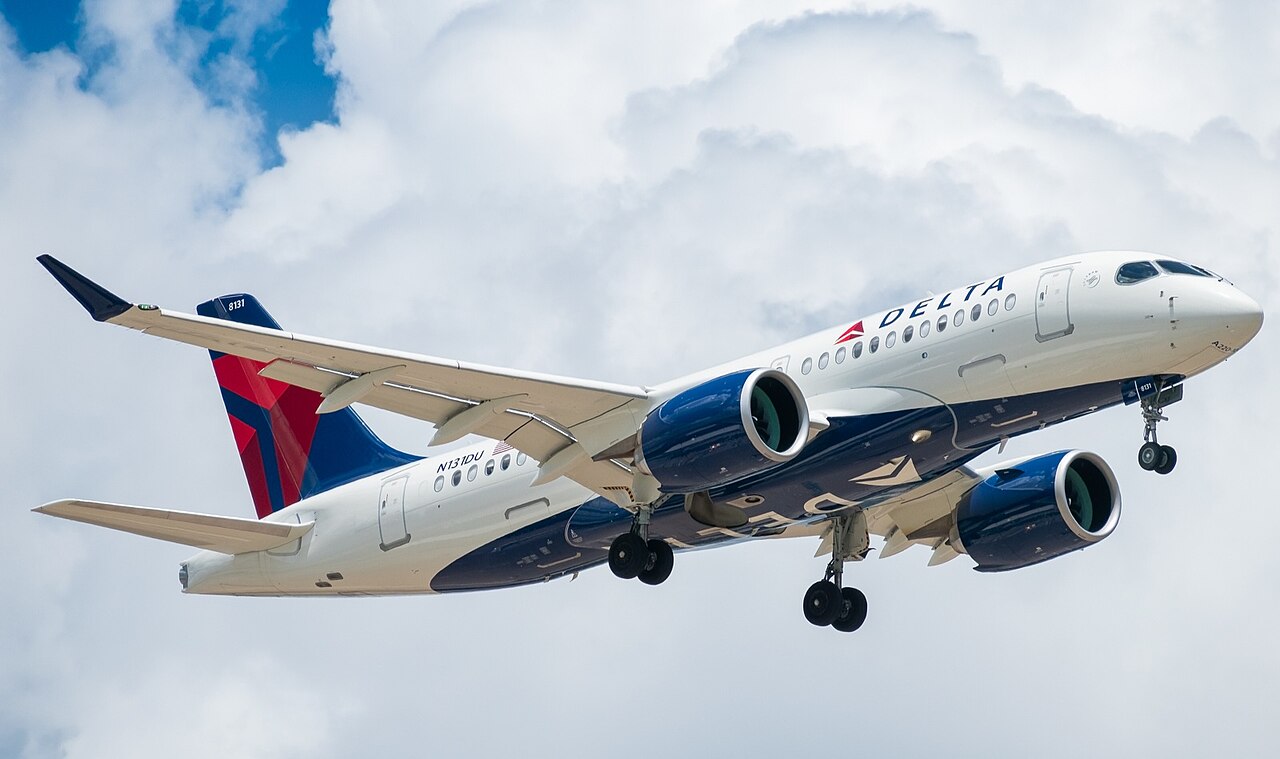
*Delta Air Lines A220-100 โ€” this newer aircraft type is Delta's go-to choice for short-haul point-to-point routes in recent years.*

The biggest differentiator from other U.S. carriers: more than 60% of Delta's revenue comes from high-margin businesses (premium cabins, co-brand credit cards, MRO maintenance), not from low-fare economy class fare wars. This structure makes it more resilient than peers during periods of fuel volatility.

Delta's Four Major Revenue Segments

Delta's business model is no longer just "selling tickets." Its revenue can be broken into four pieces, each with different margins and counter-cyclical resilience.

โ‘  Passenger Tickets (Core Revenue)

Passenger service remains the largest revenue source, but the mix has clearly upgraded:

  • Premium cabins (First + Business + Premium Select): Anchored at the three major hubs of Atlanta, New York JFK, and Los Angeles LAX, targeting business travelers and high-spending leisure travelers, with +14% YoY growth in Q1 2026. The most critical point: premium cabin revenue has caught up with main cabin revenue, meaning Delta earns a higher per-seat revenue (PRASM) on the same load factor.
  • Main Cabin: Makes up the majority of seats flown, but contributes far less marginal profit than premium cabins. Delta now relies primarily on its dynamic pricing system to lift per-seat revenue โ€” on the same flight, late bookers pay several times more. Delta plays this game better than anyone.
  • International long-haul: Including transatlantic (New York/Atlanta to London, Paris, Amsterdam) and transpacific (Detroit/Seattle to Tokyo, Shanghai, Seoul), the highest-margin routes. Delta has built the SkyTeam alliance with Air France, KLM, and Virgin, and holds equity partnerships with Korean Air and Virgin Australia, consolidating its international network.
Why you can't just look at "passenger volume" when evaluating Delta: Because its strategy is to carry fewer passengers while earning higher per-ticket revenue. A fully-loaded 767 to London earns far more than a fully-loaded A320 to Chicago.
body1
body1

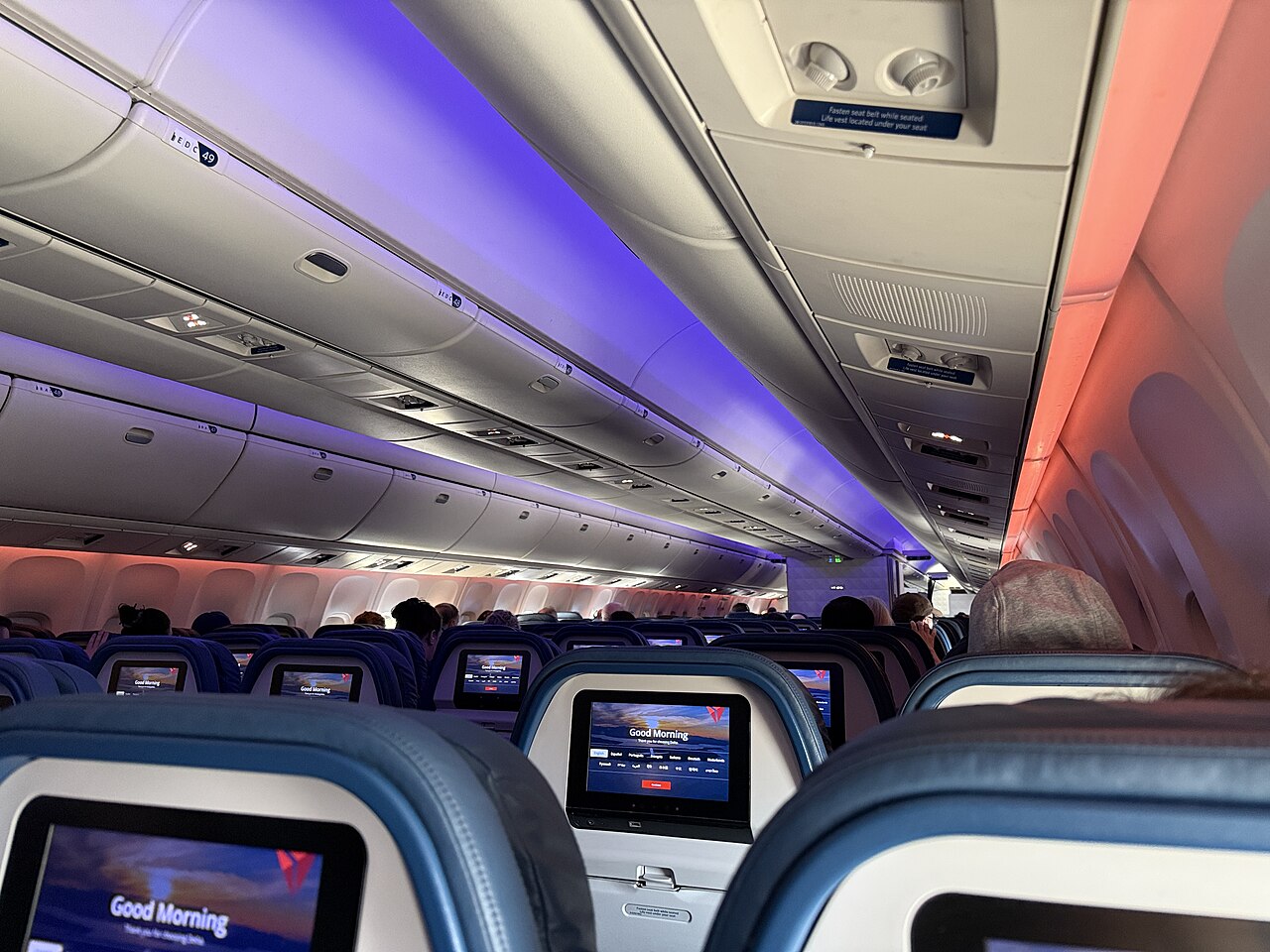
*Delta 767-300ER economy cabin โ€” the workhorse for international long-haul, where business class and Premium Select pull up per-flight revenue.*

โ‘ก Loyalty Miles + AmEx Co-Brand Card (High-Margin Cash Cow)

This is the business Wall Street loves most about Delta โ€” with almost zero marginal cost:

  • SkyMiles loyalty program: Delta sells SkyMiles miles to American Express (AmEx); AmEx distributes them as rewards through co-brand credit cards (Delta SkyMiles Gold/Platinum/Reserve), then collects annual fees and interchange from cardholders. Delta bills more than $2 billion per quarter from this segment, with +10% YoY growth in Q1 2026.
  • Why is it so valuable? Because AmEx prepays for a batch of miles regardless of whether end users actually redeem them โ€” Delta receives prepaid cash. Even if you keep a Delta Reserve card in your drawer and never use it, Delta has already pocketed that money.
  • Extremely counter-cyclical: Whether fuel costs spike, labor contracts raise wages, or the economy turns, this revenue is unaffected. Wall Street typically uses "credit card revenue" to compute Delta's "structural cash flow" โ€” this part of the valuation behaves like a financial stock, not a traditional airline.
Simply put: Delta runs half a virtual bank. It doesn't pay customers interest; it just sells miles and gets a steady cash stream.
body2
body2

*Co-brand credit cards โ€” Delta sells miles to AmEx, AmEx charges cardholders annual fees, a win-win business model.*

โ‘ข Third-Party MRO Maintenance Business (Second Growth Curve)

Delta's Delta TechOps is one of the world's largest third-party aircraft maintenance (MRO โ€” Maintenance, Repair, Overhaul) service providers:

  • Who are the customers? Other airlines (some foreign state-owned carriers are clients), corporate charter operators, and government customers.
  • Margin is far higher than passenger service: Aircraft maintenance is a professional service with almost no fuel or labor cost volatility, and gross margins can reach 20โ€“30%, far above passenger business.
  • Strategic significance: Delta uses its own massive fleet as a "lab," spreads MRO expertise and scale across external clients to amortize costs, then earns additional revenue. This is the classic "open up an internal platform to outsiders" playbook โ€” similar to AWS opening up Amazon's internal IT.
body3
body3

*Delta's Atlanta hub (ATL) ground operations โ€” nearly 1,000 aircraft take off and land here daily, the world's busiest airport hub, and the common foundation for both MRO and passenger operations.*

โ‘ฃ Cargo + Airport Value-Added Services

  • Cargo (Delta Cargo): Belly cargo on passenger aircraft, primarily serving high-value goods (pharmaceuticals, electronics, fresh seafood), generating roughly $800โ€“900 million in revenue in 2025.
  • Sky Club lounges: Exclusive lounges for premium passengers and AmEx cardholders, monetized through entry fees and F&B.
  • Delta Vacations: Bundled sales of airfare + hotel + car rental, boosting customer lifetime value through bundling.
  • Ancillary revenue: Baggage fees, seat selection fees, name-change fees, etc. โ€” each item is small, but together they add up to billions of dollars in revenue.
Putting these four pieces together, Delta is no longer a "pure-play airline" โ€” it is an "aviation + finance + logistics + travel" conglomerate. This structural transformation is the core reason it has outperformed other legacy U.S. carriers (American, United).

Latest Fundamentals: 2026 Q1 Results Breakdown

Delta's Q1 2026 results can be summed up in six words: "looks shaky on the surface, fundamentally very strong."

Revenue Hits a New High, but a Short-Term Loss

Metric2026 Q1Comparison
Total revenue$15.854 billion (single-quarter record)YoY +5โ€“7%
Net loss$289 millionOne-time fuel impact
Earnings per share (EPS)Briefly negativeAccounting period mismatch
Free cash flowSlightly negativeSeasonal low

Why did Q1 post a loss? Because Delta has a special accounting arrangement โ€” it used hedging instruments to lock in part of its 2026 jet fuel price, but Q1 coincided with an escalation in Middle East tensions, and spot jet fuel briefly spiked. The hedges only softened part of the impact; the rest directly eroded profits. This is not an operational issue, but an accounting timing issue. As the hedges gradually roll off and new contracts take effect, Q2 is expected to return to positive territory.

Full-Year Guidance: Management More Bullish Than the Market

  • 2026 full-year EPS guidance: $6.50 โ€“ $7.50
  • 2026 free cash flow target: > $4 billion (slightly below 2025's $4.6 billion)
  • Fleet refresh: 20+ new aircraft deliveries in 2026 (A220 + A330neo + 737 MAX)
  • Sustainable Aviation Fuel (SAF) long-term purchase contracts: signed to cover ~5% of fuel demand over the next 5โ€“10 years
Delta management has historically been conservative โ€” past guidance has often started low and then exceeded expectations. If 2026 oil prices normalize, EPS has a chance to challenge the upper end of guidance.

Debt and Capital Returns

  • Total debt: ~$64 billion (peaked above $70 billion in 2020)
  • Deleveraging strategy: pay down debt from operating cash flow, expected to reduce another $3โ€“4 billion by end of 2026
  • Share buybacks: paused in Q1, expected to resume in Q3โ€“Q4, $1.5โ€“2 billion in 2026 full-year buybacks
  • Dividend: $0.15/share quarterly, paid steadily

Valuation

  • Forward PE: currently around 7โ€“9x (based on mid-point 2026 EPS estimate of $7)
  • Peer comparison: American ~5โ€“7x, United 6โ€“8x, Southwest 10โ€“12x
  • Historical range: Delta's 5-year median PE is roughly 8โ€“10x
  • Verdict: valuation is not cheap, but reasonable, neither at "bottom-fishing" levels nor "bubble" levels

Bull vs. Bear Analysis

Bull Case ๐ŸŸข

  1. Business travel demand is resilient: Q1 2026 premium cabin +14% YoY, driven by genuine business travelers returning, not leisure passengers. The WFH wave is over; companies need to see clients, hold meetings, and fly.
  2. Co-brand card cash flow is near-zero cost: AmEx revenue +10% flows directly to operating profit โ€” every additional percentage is pure profit.
  3. MRO is independently growing: immune to travel seasonality, with high margins โ€” Delta's "secret weapon."
  4. Deep moat in U.S. domestic hub network: time slots, gates, and runways at Atlanta, New York, and Los Angeles are scarce resources; new entrants can't replicate this network.
  5. #1 on-time performance for years: strong customer stickiness โ€” business travelers hate delays, and Delta's reputation took a decade to build.
  6. Fleet refresh reduces fuel burn: new aircraft (especially A220, A330neo) save 20โ€“25% fuel vs. older ones, compressing unit cost over time.
  7. International expansion: transatlantic and transpacific capacity continues to grow, the highest-margin segment.
  8. Strong capital return discipline: simultaneous debt reduction + buybacks + dividends โ€” three legs moving in sync.

Bear Case ๐Ÿ”ด

  1. Highly cyclical industry: once the U.S. economy enters recession, business travel budgets are first to be cut. Both 2008 and 2020 crises hit airlines first.
  2. Fuel costs are 30%+ of total expenses: Middle East tensions, the Russia-Ukraine conflict, OPEC production cuts โ€” any single variable can push jet fuel up 30โ€“50%, immediately eroding profits.
  3. Labor contracts keep raising wages: pilot, flight attendant, and ground crew unions renegotiate every 3โ€“4 years with 15โ€“25% raises โ€” a structural cost pressure.
  4. Low-cost carrier competition: Spirit, Frontier, and Allegiant compete for low-end leisure travelers, forcing legacy carriers to run economy class promotions, pressuring ticket prices.
  5. Industry overcapacity: U.S. carriers collectively expanded after the pandemic; 2025โ€“2026 capacity growth outran demand growth, triggering fare wars.
  6. High debt + interest expense: $64 billion in debt under a high-rate Fed environment means tens of billions in annual interest expense, eating into profits.
  7. Geopolitical black swans: terror attacks, pandemics, wars โ€” these are traditional airline "killers" that can't be hedged.
  8. Rising SAF mandate cost: the EU and several U.S. states mandate SAF usage; sustainable fuel costs 2โ€“3x regular jet fuel, a long-term pressure.
  9. FX volatility: a strong dollar hurts overseas international routes (foreign-currency revenue translates back into fewer dollars).
Summary: Delta has the best business model among U.S. carriers, but it's still a "cyclical stock," not a "consumer stock." Fuel, recession โ€” these macro factors are beyond any CEO's control.

Investment View: Short-Term vs. Long-Term

Short-Term Trading (Weeks to Months)

View: Neutral, slightly cautious.

  • Factors supporting the short side: stable AmEx revenue, high earnings predictability, reasonable PE, suitable as a "defensive airline stock" for short-term trades. Whenever the broader U.S. market pulls back, Delta typically falls less than other airlines.
  • Factors against the short side: airline stocks are extremely sensitive to oil, pandemics, and sudden events โ€” short-term volatility can be huge. A 60% crash in a few days like March 2020 can repeat at any time.
  • Key indicators to watch:

- WTI crude oil price: every $10 increase cuts full-year EPS by roughly $1

- U.S. ISM Services PMI: a break below 50 is an early signal of weakening business travel

- Delta's premium cabin PRASM YoY growth: two consecutive negative quarters is a warning

- AmEx quarterly results and Delta SkyMiles card new accounts: leading indicators

Short-term strategy: wait for pullbacks and scale in, don't go all-in. Delta is suitable as a core airline position, not as a speculative vehicle.

Long-Term 3โ€“5 Year Value Allocation

View: Worth holding, but you need to pick the right entry price.

  • Factors supporting the long view:

- Structural business model upgrade: premium cabin + co-brand card + MRO share will continue to rise, reducing reliance on traditional ticket revenue

- Cash flow stability improves: co-brand card revenue is essentially "quasi-bond" income, with counter-cyclical resilience growing

- Capital return expands post-deleveraging: by 2027โ€“2028 debt falls below $50 billion, net profit margin visibly expands

- AI + dynamic pricing: Delta does AI better than any peer in the industry, with long-term pricing-power upside

  • Factors against the long view:

- Low industry ceiling: airline industry growth is tied to GDP and population growth, doesn't have the explosive upside of tech stocks

- Policy risk: carbon regulation, SAF mandates, consumer protection laws โ€” long-term costs only go up, not down

- ESG pressure: younger investors may avoid high-carbon sectors

  • Ideal entry zone: Forward PE below 6โ€“7x, or 20โ€“30% discount to historical median. Current PE 7โ€“9x is reasonable but not yet at "bottom-fishing" levels.

Who Is a Good Fit / Bad Fit?

Investor TypeSuitable?Why
Retiree long-term income investorโœ… SuitableStable dividend, mature business model, no need to watch the market daily
Value investorโœ… SuitablePredictable cash flow, valuation has a floor
Growth investorโŒ Not suitableLow growth rate, unlikely to deliver 10x returns
Swing traderโš ๏ธ Limited suitabilityHigh short-term volatility but with trending direction
ESG investorโŒ Not suitableHigh-carbon sector, against ESG principles
Buy-and-hold lazy investor for 5โ€“10 yearsโœ… SuitableDelta is the most stable choice among U.S. carriers

Key Indicators to Track Going Forward

  1. Quarterly EPS vs. market consensus: two consecutive misses = structural warning
  2. AmEx SkyMiles co-brand card revenue YoY growth: below 5% warrants caution
  3. Premium cabin PRASM YoY growth: turning negative signals weakening business travel
  4. Total debt change: deleveraging slowing = deterioration in earnings quality
  5. Fleet refresh progress: new aircraft delivery delays slow fuel-burn improvement
  6. WTI crude oil price + Middle East tensions: jet fuel is the biggest variable
  7. Delta management's buyback pace: pause or shrinkage = confidence warning
  8. U.S. ISM Services PMI + GDP growth: macro leading indicators
  9. Low-cost carrier Spirit / Frontier capacity additions: early signal of low-end fare wars
  10. SAF policy and carbon regulation: long-term cost pressure from the policy side

Summary

Delta Air Lines is, among the Big Four U.S. carriers, the one with the most structural business model, most stable cash flow, and most disciplined management. It is no longer "an airline that sells tickets," but a "finance + logistics + travel conglomerate that sells capacity."

Strengths are clear โ€” co-brand card cash cow, independently growing MRO, deep hub network moat;

Weaknesses are also clear โ€” high cyclicality, fuel sensitivity, ESG pressure, low growth ceiling.

Short-term: neutral-to-cautious, wait for pullbacks and scale in.

Long-term (3โ€“5 years): worth holding, target price corresponds to PE 8โ€“10x.

In one sentence: Delta is the most worthy long-term hold among U.S. carriers, but it's not the only option, nor the cheapest option. Before buying, look at oil prices, valuation, and your own risk tolerance. Don't go all-in just because you like the airline industry.

โš ๏ธ Disclaimer: This article is for educational purposes only and does not constitute investment advice. Investing involves risk.

Related Articles

AI Recommended
Disney (DIS) Investment Analysis: Top-Tier IP Flywheel + Streaming Inflection Point โ€” The Comeback of an Entertainment Empire?
StocksFeatured

Disney (DIS) Investment Analysis: Top-Tier IP Flywheel + Streaming Inflection Point โ€” The Comeback of an Entertainment Empire?

Disney Q2 FY26 revenue came in at $25.17 billion, with the Experiences segment contributing 70% of profits at a 33% margin. DTC streaming swung to full-year profitability with $1.3 billion (flipped from losses to profit!), and Disney+ subscribers reached 195.7 million. Marvel, Star Wars, and Pixar IPs power a full value-chain flywheel. However, pressures remain from ESPN's sports-rights cost burden, $90 billion in debt, and CEO transition uncertainty.

21/06/2026 ไธŠๅˆ06:2511 min
Home Depot (HD) Investment Analysis: Dual-Customer Business Model + Fundamentals + Short and Long-Term Outlook
StocksFeatured

Home Depot (HD) Investment Analysis: Dual-Customer Business Model + Fundamentals + Short and Long-Term Outlook

A comprehensive breakdown of Home Depot's dual-customer omnichannel business model (DIY retail + Pro wholesale + value-added services + digital supply chain), reviewing the fundamentals of FY2026 Q1's $41.8 billion revenue, 0.6% same-store sales growth, and 12.4% free cash flow margin. The analysis balances bullish and bearish arguments to deliver a 3-5 year investment outlook for both short-term and long-term horizons.

23/06/2026 ไธŠๅˆ12:4013 min
U.S. Stock WMT (Walmart) Investment Analysis: Full Breakdown of the Four Engines โ€” Offline Retail + E-Commerce + Membership + Advertising
StocksFeatured

U.S. Stock WMT (Walmart) Investment Analysis: Full Breakdown of the Four Engines โ€” Offline Retail + E-Commerce + Membership + Advertising

Breaking down Walmart's four-layer integrated business model (U.S. domestic supercenters + global international retail + e-commerce Walmart+ membership + Walmart Connect retail media advertising), mapping out the fundamentals of FY2026 Q1's $182.6 billion revenue, +27% ad growth, and 42 million Walmart+ members, balancing bullish and bearish logic, and delivering a 3-5 year investment view for both short-term and long-term horizons.

23/06/2026 ไธŠๅˆ03:2917 min