AMZN (Amazon) Investment Analysis: The Four-Engine Empire of E-Commerce, Cloud, Advertising, and AI
Amazon posted Q1 2026 revenue of $181.52B and net income of $30.255B. AWS generated $37.59B (+28% YoY, the fastest growth in 15 quarters!) with a 37.8% margin. Advertising reached $17.24B (+22%). North American retail margin hit a record high of 9%. Backlog orders sit at $244B, AI annualized revenue exceeds $15B, and Amazon is deploying its self-developed Trainium chips. However, the company faces massive capex, stiff cloud competition from Microsoft and Google, and rising pressure from Walmart and TikTok Shop.
Amazon: The World's Largest Four-Engine Business Empire
Amazon (NASDAQ: AMZN) is far more than an e-commerce company. It is the world's largest vertically integrated empire of e-commerce + cloud computing + advertising + AI. The four business segments feed into each other, cross-subsidize one another, and form an irreplicable comprehensive moat.
Q1 2026 Key Data:
- Total revenue $181.52B
- Net profit $30.255B
- AWS revenue $37.59B (+28%, fastest growth in 15 quarters ๐ฅ)
- AWS operating margin 37.8%
- Advertising revenue $17.24B (+22%)
- North America retail operating margin 9% (all-time high โ )
- AWS remaining performance obligations $244B
- Prime members 280M
Amazon's magic: e-commerce generates traffic to feed ads, ad profits fund logistics, and AWS profits subsidize everything. Four mutually reinforcing engines = the ultimate form of vertical integration.

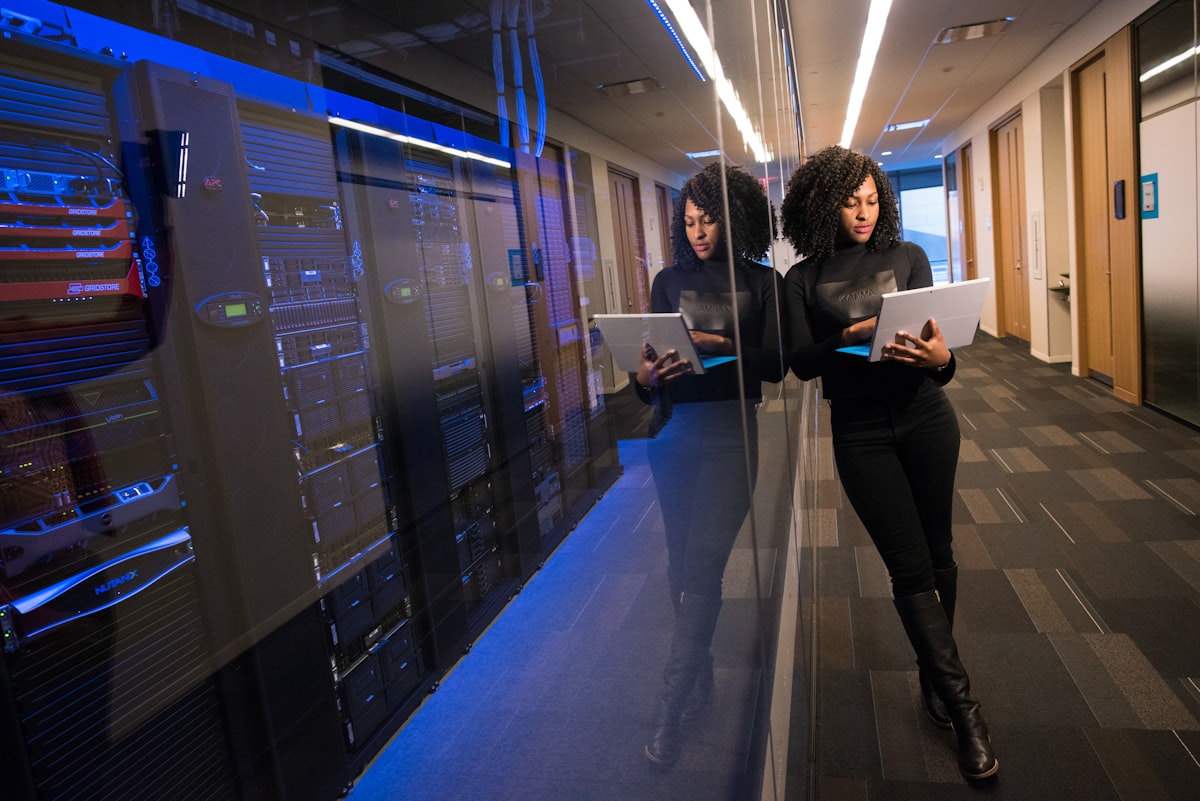
*AWS data centers โ the source of the vast majority of Amazon's operating profit. $244B in remaining performance obligations = future revenue already locked in.*
I. The Four-Pillar Vertically Integrated Business Model
โ Global E-commerce Retail โ The Traffic Foundation
| Business | Model | Characteristics |
|---|---|---|
| First-party (1P) | Direct merchandise sales | Traffic entry point, low margin |
| Third-party sellers via FBA | Commissions + fulfillment & storage fees | ๐ฐ Core incremental driver |
| International markets | Global expansion | India / Southeast Asia = long-term growth engine |
| Whole Foods Market | Brick-and-mortar grocery | Offline supplement |
| Prime membership | Annual subscription | Locks in repeat purchases ๐ |
Core Logic:
First-party merchandise โ low margin โ but brings massive traffic
โ Third-party sellers onboard โ commissions + FBA fees = high-margin revenue
โ Prime members (280M) โ free shipping + video + music โ locks in annual repeat purchases
โ Shopping data โ precision ad targeting โ ad revenue (55%+ gross margin)
โ Traffic flywheel: more buyers โ more sellers โ more selection โ more buyersStrategic Shift in Retail: From Razor-Thin Margins to Stable Profits
Automated warehouses + AI supply-chain optimization โ fulfillment costs keep falling โ North America retail operating margin rose from 2โ3% to 9% (all-time high). This is a qualitative transformation for Amazon's retail business โ from a "loss-making traffic entry point" to a "stable profit engine."
โก AWS Cloud Computing โ The Core Profit Engine ๐ฐ
| Product | Function | Characteristics |
|---|---|---|
| IaaS | Foundational cloud services | #1 globally |
| Bedrock | Generative AI platform | Enterprise AI services |
| SageMaker | ML development platform | Data scientist tooling |
| Trainium | In-house AI chip | Nvidia alternative, lowers compute cost |
| Graviton | In-house server CPU | General-purpose compute cost reduction |
AWS Key Data:
- Q1 revenue $37.59B (+28%)
- Operating margin 37.8%
- Remaining performance obligations $244B (+40% YoY)
- AI annualized revenue $15B+ ๐ฅ
AWS = Amazon's money printer. #1 global cloud market share, 37.8% operating margin โ the vast majority of the company's operating profit comes from AWS. $244B in remaining performance obligations = 2โ3 years of future revenue already locked in.
In-House Chip Strategy:
Nvidia GPUs are too expensive โ Amazon designs its own Trainium AI chips
โ Significantly lower compute cost โ cheaper AI training/inference for enterprise customers
โ Capture AI compute orders in the "non-Nvidia" ecosystem
โ Bedrock + Trainium = complete full-stack AI servicesโข Advertising Business โ The Second High-Growth Curve ๐
| Product | Characteristics |
|---|---|
| Sponsored product ads | High-conversion in shopping context |
| DSP brand advertising | Cross-channel brand campaigns |
| Live / video ads | Prime Video ads |
Core Advantages of the Advertising Business:
- Gross margin 55%+
- Q1 revenue $17.24B (+22%)
- Contextual ads > social ads โ users are already in purchase mode โ extremely high conversion
- Third-party sellers keep adding ad spend โ revenue per seller trending up
Amazon Ads = the world's third-largest digital ad platform (only behind Google + Meta). But its conversion rate is far higher โ because users already have purchase intent. This gives Amazon ads both superior gross margins and superior growth versus traditional social advertising.
โฃ Supporting Value-Added Businesses
| Business | Role |
|---|---|
| Prime Video / Music | Member stickiness |
| Alexa smart devices | Home entry point |
| B2B enterprise procurement | Business purchasing platform |
| Warehouse robotics | Automation cost reduction |
Overall Profit Logic
E-commerce traffic โ ad monetization (55%+ gross margin)
AWS cloud profit (37.8%) โ subsidize retail logistics investment
Ads + AWS profits โ fund massive capex (cloud compute + warehouse automation)
E-commerce data โ optimize ad targeting + AI recommendations
Cloud AI tech โ feedback into retail supply chain + personalization
โ Vertical integration = an irreplicable comprehensive moatII. Latest Fundamentals

Q1 2026 Financial Summary
| Metric | Q1 2026 | YoY |
|---|---|---|
| Total revenue | $181.52B | Strong growth |
| Net profit | $30.255B | Profit explosion |
| AWS revenue | $37.59B | +28% ๐ฅ |
| AWS operating margin | 37.8% | High watermark |
| Advertising revenue | $17.24B | +22% |
| North America retail operating margin | 9% | All-time high โ |
Balance Sheet & Orders
| Metric | Value |
|---|---|
| AWS remaining performance obligations | $244B (+40%) |
| AWS AI annualized revenue | $15B+ ๐ฅ |
| Cash + marketable securities | $143B |
| Total liabilities | $235B |
| Prime members | 280M |
Recent Highlights
| Event | Impact |
|---|---|
| AWS +28% | Fastest growth in 15 quarters ๐ฅ |
| North America retail margin 9% | Retail qualitative shift โ |
| Trainium chips | AI compute cost reduction |
| International losses narrowing | Continuous improvement |
Valuation Metrics (June 2026)
| Metric | AMZN | Interpretation |
|---|---|---|
| Forward P/E | ~25โ30x | Reasonable for a tech giant |
| EV/Sales | ~2โ3x | Reasonable for a mega-cap |
| FCF Yield | Affected by capex | On the lower side (heavy investment cycle) |
III. Bull vs. Bear Investment Logic
๐ข Bull Catalysts
1. #1 Global E-commerce + Proprietary Logistics + Prime = Triple Lock on Customers
#1 in global e-commerce market share. Proprietary warehouse and logistics network = no competitor can replicate. 280M Prime members = annual renewals lock in repeat purchases. The third-party seller ecosystem = Amazon's "App Store" โ once onboarded, sellers don't leave.
2. AWS Global Cloud Hegemon + AI Compute Explosion
AWS holds steady #1 in global cloud share. Surging AI compute demand from governments and enterprises โ Bedrock + Trainium = complete full-stack AI. In-house Trainium chips dramatically cut customers' compute costs โ capture orders in the "non-Nvidia" ecosystem. AI annualized revenue of $15B+ = new growth engine.
3. Advertising = High-Margin Growth Machine
$17.24B/quarter ร 55%+ gross margin = nearly $10B in gross profit per quarter. E-commerce contextual ad conversion far outperforms social ads. Third-party sellers keep adding ad spend โ long-term double-digit growth in ad revenue.
4. Retail Margin Qualitative Shift โ From Razor-Thin to Stable Profits
North America retail operating margin rising from 2โ3% to 9% = a historic transformation. Automated warehouses + AI supply chain โ fulfillment costs keep declining. If retail margins keep climbing โ Amazon's overall profits will expand significantly.
5. End-to-End AI Implementation
Cloud AI (Bedrock foundation models) โ enterprise AI services revenue
Retail AI (smart recommendations) โ higher conversion = more GMV
Supply-chain AI (inventory forecasting) โ lower inventory cost = higher retail margin
Ad AI (automated bidding) โ higher ad efficiency = more ad revenue
โ AI creates value in every Amazon business6. $143B in Cash + $244B in Orders = Plenty of Ammunition
A massive cash pile supports compute capacity expansion + buybacks. AWS $244B in remaining performance obligations locks in revenue for the next 2โ3 years.
7. India / Southeast Asia = Long-Term Incremental Growth
Long-term growth runway in emerging e-commerce markets is ample. Short-term losses continue, but over time these markets could become the next North America.
๐ด Core Risks
1. Massive Capex Squeezes Short-Term FCF
The capital expenditure for cloud compute + warehouse automation is enormous โ short-term free cash flow is under pressure. If AI demand growth decelerates โ capex return-on-investment gets questioned.
2. Microsoft Azure + Google Cloud Continue to Compete
| Competitor | Threat |
|---|---|
| Microsoft Azure | OpenAI tie-in โ default choice for enterprise AI |
| Google Cloud | TPU + Gemini AI โ competition in in-house AI chips |
Price competition among cloud providers could compress AWS gross margins.
3. Intensifying E-commerce Competition
| Competitor | Threat |
|---|---|
| Walmart | Online-offline integration |
| TikTok Shop | Social commerce targeting younger consumers |
| Temu / Shein | Low price-share grab |
4. Generative AI Lagging the Microsoft-OpenAI Ecosystem
Azure + OpenAI = the default enterprise AI combination. Bedrock is strong, but brand awareness lags behind. Commercial deployment pace may be slower than expected.
5. Regulatory Pressure
E-commerce platform monopoly scrutiny + seller fee regulation + data privacy compliance = persistent uncertainty.
6. International Market Losses
International retail is still loss-making (though narrowing). FX volatility + country-by-country regulation = uncertainty.
7. Macro Consumer Weakness
Economic slowdown โ consumers cut spending โ GMV growth slows โ sellers cut ad spend.
IV. Comprehensive Investment Judgment
Short-Term Tactical Trading (1โ3 Months): โ Neutral-to-Bullish
| Factor | Assessment |
|---|---|
| Momentum | AWS +28% = strong catalyst |
| Catalysts | Prime Day, AWS re:Invent, AI product launches |
| Support | Ads + AWS dual engines + margin improvement |
| Risks | Capex scale, consumer data, cloud competition |
Long-Term Value Allocation (3โ5 Years): โ Bullish
| Scenario | Probability | Core Assumption | Target Direction |
|---|---|---|---|
| Super bull market | 20% | AWS AI explosion + retail margins keep rising + high ad growth | +40โ70% |
| Growth | 40% | AWS +20%/year + Ads +15%/year + retail stable profits | +15โ35% |
| Base | 30% | AWS slows to +18% + competitive pressure + weak consumer | +0โ12% |
| Bear market | 10% | Cloud growth slows sharply + retail gives back gains + AI lags | -20โ35% |
Long-Term Operating Approach:
- Core tech-giant holding: Amazon is one of the very few companies simultaneously running "e-commerce + cloud + ads + AI" engines. Diversified business = natural hedge against cyclical risk
- AI compute theme: AWS Bedrock + Trainium = the "non-Nvidia" AI compute option. If enterprises want to reduce Nvidia dependency โ AWS is the biggest beneficiary
- Portfolio pairing: AMZN (e-commerce + cloud + ads) + MSFT (cloud + Office + AI) + GOOGL (search + ads + AI) = tech trinity triangle
- Not suitable for: income investors chasing high dividends (Amazon pays no dividend), or investors overly sensitive to capex
Key Indicators to Monitor
| Indicator | Watchpoint | Why It Matters |
|---|---|---|
| AWS growth | Each quarter (can it sustain 25%+?) | Profit engine |
| AWS operating margin | Can it hold 37%+? | Pricing-power validation |
| Ad growth | Each quarter (can it sustain 20%+?) | Second engine |
| North America retail margin | Can it break 10%? | Retail qualitative shift ๐ฅ |
| Bedrock / AI revenue | Annualized revenue growth | AI monetization |
| Trainium adoption | Customer feedback | In-house chip competitiveness |
| Capex scale | Each quarter | FCF impact |
| International retail losses | Narrowing pace | New-market path |
| Prime member growth | Each year | User lock-in |
Conclusion: The Flywheel Effect of the Four-Engine Empire
Amazon's investment thesis can be condensed into:
Amazon's flywheel is already spinning fast enough that no one can stop it. E-commerce traffic โ ad revenue โ AWS profit โ warehouse automation โ retail margins climb โ more traffic โ flywheel accelerates.
- E-commerce = traffic entry point (margins improving)
- Advertising = high-margin growth machine (55%+ gross margin)
- AWS = profit engine (37.8% margin + $244B in orders)
- AI = end-to-end empowerment (Bedrock + Trainium + retail AI)
The Biggest Debate:
"Amazon lags the Microsoft-OpenAI combination in AI โ can Bedrock truly challenge Azure + OpenAI?"
The optimist: Amazon doesn't need to win the foundation-model race โ it only needs to use AI to upgrade its own four engines. Retail AI + Ad AI + Supply-chain AI + Cloud AI = full-stack monetization.
The pessimist: If Azure/OpenAI snags more enterprise AI customers โ AWS growth slows โ Amazon's profit engine stalls.
"Amazon's greatness lies in not being dependent on any single business. If retail falters, ads are there. If ads falter, AWS is there. If AWS falters, AI is there. Four engines propping each other up = this is Amazon's deepest moat."
Final note: AMZN is the most diversified company among the tech giants. Long-term holding = investing in "the infrastructure of the global digital economy." Capex pressures short-term FCF, but the long-term payoff = higher margins and stronger competitive moats. Patience = reward.
โ ๏ธ Disclaimer: This article is for educational purposes only and does not constitute investment advice. Investing involves risk.